Large fibreglass pools are manufactured as a single shell and delivered to your property, making them a popular choice for homeowners wanting a faster installation and lower ongoing maintenance. Traditional concrete pools are built entirely on-site using reinforced steel and sprayed or poured concrete, allowing complete design flexibility but requiring a longer construction process.
This guide compares large fibreglass pools with traditional concrete pools for family backyards, lap pools and larger residential swimming pools, helping you understand the advantages and trade-offs of each option before making a decision.
Looking for a compact pool instead?
If you’re planning a smaller backyard pool, read our dedicated comparison guide on fibreglass vs precast concrete plunge pools.
Quick Comparison: Fibreglass vs Concrete Pools
| Feature | Large Fibreglass Pool | Traditional Concrete Pool |
|---|---|---|
| Typical Size | 6m × 3m to 10m+ × 4.5m | Fully custom dimensions |
| Best For | Family swimming, entertaining and lap swimming | Custom architectural designs and unique layouts |
| Construction Method | Factory-manufactured shell | Built on-site using reinforced steel and sprayed or poured concrete |
| Installation Time | Typically 4–8 weeks* | Typically 3–6 months* |
| Maintenance | Low | Higher |
| Design Flexibility | Limited to available moulds | Virtually unlimited |
| Surface Finish | Smooth gelcoat | Plaster, aggregate or tile |
| Typical Installed Cost | $65,000–$95,000+ | $60,000–$110,000+ |
*Installation time varies depending on site access, approvals, engineering, weather and project complexity.
What Is a Concrete Pool?
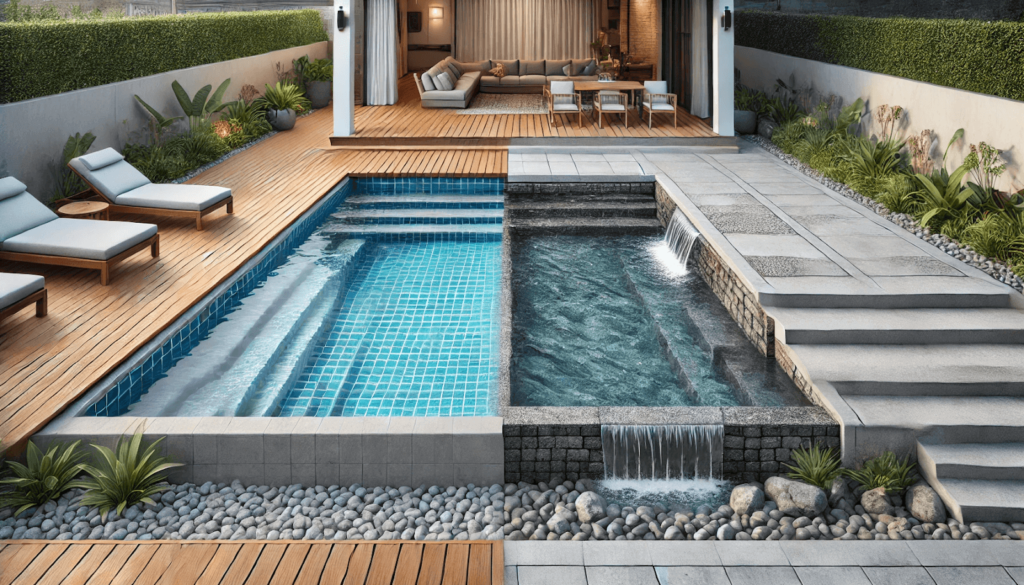
A traditional concrete pool is an inground swimming pool built entirely on-site using a reinforced steel framework that is sprayed or poured with concrete before being finished with plaster, aggregate or tiles. This construction method allows almost unlimited flexibility in size, shape and depth, making it suitable for large family pools, lap pools and architecturally designed backyards where standard pool dimensions may not be suitable.
The main advantage of a traditional concrete pool is design freedom. Features such as custom curves, infinity edges, integrated spas, beach entries and unique layouts can all be incorporated during construction. However, this flexibility comes with longer construction times and higher ongoing maintenance. Because the pool is built on-site, the process typically involves excavation, steel reinforcement, concrete application, curing and finishing, which can take several months depending on the project’s complexity and site conditions.
For homeowners whose priority is a completely bespoke swimming pool, a traditional concrete pool offers the greatest level of customisation. However, it generally requires a larger investment of both time and ongoing maintenance than a comparable fibreglass pool.
What Is a Fibreglass Pool?
A fibreglass pool is a pre-manufactured swimming pool shell made from layers of fibreglass and resin in a controlled factory environment. Once completed, the shell is transported to your property and installed into a prepared excavation. Large fibreglass pools are available in a range of standard sizes, typically from around 6 metres to more than 10 metres in length, making them suitable for family swimming, entertaining and recreational use.
Because the pool shell is manufactured before arriving on site, installation is generally faster and more predictable than a traditional concrete pool. The smooth, non-porous gelcoat surface also helps resist algae growth, reducing ongoing cleaning and maintenance. While fibreglass pools are limited to available mould designs, modern manufacturers offer a wide range of shapes, sizes and layouts that suit most residential backyards.
For homeowners looking for a durable, low-maintenance swimming pool with a faster construction timeline, a large fibreglass pool is often the more practical choice.
Types of Fibreglass Pools
Not all fibreglass pools are designed for the same purpose. Depending on your lifestyle and available backyard space, you can choose from lap pools, family pools or entertainer pools.
| Pool Type | Typical Size | Best For | Key Benefits |
|---|---|---|---|
| Lap Pool | 10–12m long | Fitness and regular swimming | Long, narrow design ideal for exercise while fitting narrower blocks. |
| Family Pool | 8–12m long, 1.5–2m deep | Everyday family use | Plenty of room for children, relaxation and recreational swimming. |
| Entertainer Pool | 10m+ | Large backyards and entertaining | Designed for BBQs, parties and larger groups with generous swimming space. |
Lap Pools
Lap pools are long and narrow swimming pools designed primarily for exercise and fitness. Their slim profile makes them ideal for properties where block width is limited while still providing enough length for uninterrupted lap swimming.
Family Pools
Family pools are the most popular choice for Sunshine Coast households. Their wider and deeper design provides plenty of room for children to play, adults to relax and families to enjoy swimming together.
Entertainer Pools
Entertainer pools are the largest fibreglass pool designs available. They are built for homeowners who regularly host family gatherings, BBQs and weekend entertaining, offering generous swimming space that becomes the centrepiece of the backyard.
Key Differences Between Concrete and Fibreglass Pools
When comparing a large fibreglass pool with a traditional concrete pool, the right choice depends on your priorities. Installation time, budget, maintenance, design flexibility and long-term ownership all influence which pool is best suited to your property and lifestyle.
The following sections compare the key differences to help you make an informed decision.
1. Installation Time
One of the biggest differences between fibreglass and traditional concrete pools is the construction timeline.
Traditional concrete pools are built entirely on-site. The process includes excavation, steel reinforcement, sprayed or poured concrete, curing, waterproofing and finishing, which typically takes between three and six months depending on the project’s complexity, weather conditions and site access.
Large fibreglass pools are manufactured before arriving on site, so construction focuses on excavation, site preparation, shell installation and commissioning. In many cases, installation can be completed within four to eight weeks, although timelines vary depending on approvals, engineering, weather and site conditions.
If minimising construction time and disruption is a priority, fibreglass is generally the faster option.
Do You Need Council Approval for a Fibreglass Pool on the Sunshine Coast?
Yes. All fibreglass pool installations on the Sunshine Coast require building approval and must comply with Queensland pool safety laws and local council requirements. Depending on your property, additional approvals may be needed for setbacks, drainage, sloping blocks or zoning overlays. Pool fencing must also comply with AS1926.1, including self-closing and self-latching gates.
2. Cost
The cost of a large fibreglass or traditional concrete pool depends on factors such as pool size, site conditions, access, excavation, engineering requirements and optional features. While every project is different, there are some general differences in how each pool type is priced.
Traditional concrete pools typically have higher construction costs due to the labour-intensive building process and longer installation timeline. Because they are built entirely on-site, costs can also increase with custom shapes, premium finishes and complex engineering requirements.
Large fibreglass pools generally offer more predictable pricing. The pool shell is manufactured before delivery, reducing on-site labour and shortening the construction process. Although additional costs such as excavation, crane hire, landscaping and pool equipment still apply, the overall installation is often more straightforward than a comparable custom concrete build.
As a general guide, installed prices for large fibreglass pools typically start from around $45,000, while traditional concrete pools commonly start from around $60,000, with premium custom projects costing considerably more. Actual costs will vary depending on your property’s access, site conditions and the level of customisation required.
3. Maintenance
Maintenance requirements are one of the biggest long-term differences between fibreglass and traditional concrete pools. Traditional concrete pools have a porous surface that can encourage algae growth, requiring more frequent brushing, cleaning and chemical balancing to keep the water clear. Over time, the interior finish may also need resurfacing or repairs as part of routine long-term maintenance.
Large fibreglass pools have a smooth, non-porous gelcoat surface that naturally resists algae growth. This makes them easier to clean and can reduce the amount of chemicals and ongoing maintenance required compared to a traditional concrete pool.
While both pool types require regular filtration, water testing and routine servicing, fibreglass is generally the lower-maintenance option, making it a popular choice for homeowners looking to minimise ongoing upkeep.
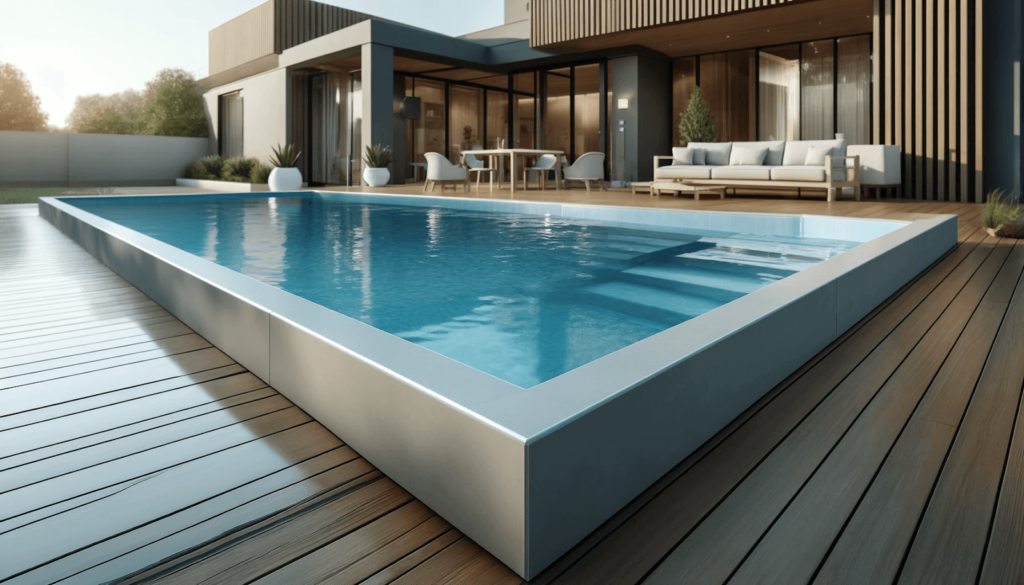
4. Durability and Longevity
Both fibreglass and traditional concrete pools are designed to provide decades of reliable use when properly installed and maintained. The difference lies in how they are constructed and the type of maintenance they require over their lifespan.
Traditional concrete pools are known for their structural strength and can last for many decades. However, the interior finish may require resurfacing over time, and any structural repairs can be more complex and costly if issues develop.
Large fibreglass pools are manufactured as a single reinforced shell that is designed to withstand normal ground movement and everyday use. The smooth gelcoat surface is durable, resistant to corrosion and does not require resurfacing in the same way as a traditional concrete finish. However, like any swimming pool, proper installation and ongoing maintenance are essential to maximise its lifespan.
When installed by experienced professionals and maintained correctly, both fibreglass and traditional concrete pools can provide excellent long-term performance. The better choice often comes down to whether you prioritise lower maintenance or complete design flexibility.
5. Design Flexibility
Traditional concrete pools offer the greatest level of design flexibility because they are built entirely on-site. Homeowners can customise the pool’s size, shape, depth and finish to suit their property, making concrete a suitable option for architecturally designed homes, irregular blocks or projects with specific design requirements.
Large fibreglass pools are manufactured using pre-designed moulds, so customisation is limited to the sizes and layouts available from the manufacturer. However, modern fibreglass ranges include a wide variety of rectangular, lap and family pool designs that suit most residential backyards.
If your project requires a completely bespoke pool with unique dimensions or features such as infinity edges, beach entries or custom curves, a traditional concrete pool provides greater flexibility. However, if a standard fibreglass design meets your needs, it offers a faster and more straightforward installation with fewer construction complexities.
6. Suitability for Large Backyards
Both fibreglass and traditional concrete pools can be excellent choices for large backyards, but they suit different project requirements.
A large fibreglass pool is often the preferred option when homeowners want a practical, low-maintenance swimming pool that can be installed more efficiently using a pre-manufactured shell. Modern fibreglass designs are available in a range of sizes suitable for family swimming, entertaining and recreational use.
A traditional concrete pool is better suited to projects where the design cannot be achieved using a standard pool shell. Its on-site construction allows for custom dimensions, unique shapes and specialised features that may not be available with fibreglass.
Choosing between the two ultimately depends on your budget, preferred construction timeline, maintenance expectations and the level of design customisation your project requires.
Which Pool Is Better for Large Backyards?
Both traditional concrete and fibreglass pools can work well in large backyards, but the better choice depends on your priorities.
For homeowners wanting a practical family pool with a faster installation timeline and lower ongoing maintenance, a large fibreglass pool is often the better option. Modern fibreglass pools are available in a range of sizes suitable for swimming, entertaining and everyday family use, making them ideal for many residential properties.
Traditional concrete pools are better suited to projects that require complete design flexibility. If your vision includes custom dimensions, unique shapes or architectural features that cannot be achieved with a standard fibreglass shell, a concrete pool provides greater design freedom. However, this comes with a longer construction process, higher maintenance requirements and a larger overall investment.
For many homeowners, the decision comes down to whether a standard fibreglass design meets their needs or whether a fully customised concrete pool is necessary.
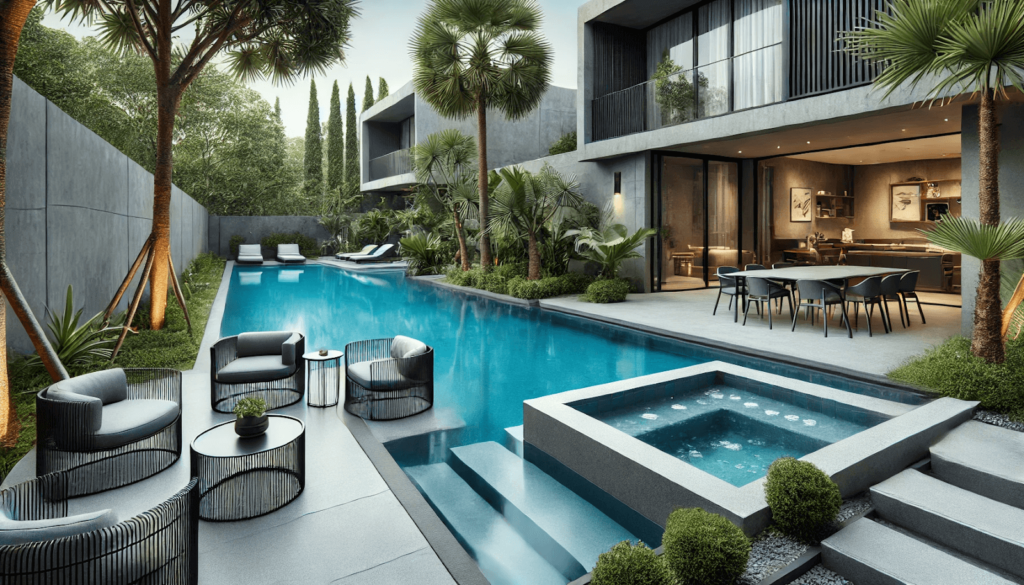
When Traditional Concrete Pools Make Sense
A traditional concrete pool is a good option when your project requires a level of customisation that cannot be achieved with a pre-manufactured fibreglass shell.
This may include architecturally designed homes, irregularly shaped blocks, custom lap pools, infinity edges, beach entries or other bespoke features that require the pool to be built entirely on-site. Traditional concrete construction also allows greater flexibility in pool dimensions, depth and overall layout.
While these advantages provide greater design freedom, they also result in a longer construction timeline and higher ongoing maintenance compared with fibreglass pools. For homeowners who prioritise a unique, custom-built swimming pool, these trade-offs may be worthwhile.
When Fibreglass Pools Are the Better Choice
For most homeowners planning a large family swimming pool, fibreglass offers the best balance of practicality, durability and long-term value.
Because the pool shell is manufactured before arriving on site, installation is generally faster and more predictable than a traditional concrete pool. The smooth, non-porous gelcoat surface also requires less ongoing maintenance, helping reduce cleaning and chemical use over the life of the pool.
Modern fibreglass pools are available in a wide range of sizes and layouts suitable for family swimming, entertaining and recreational use. If one of these designs suits your property and lifestyle, fibreglass provides a durable, low-maintenance solution without the longer construction process associated with traditional concrete pools.
Conclusion
Choosing between a large fibreglass pool and a traditional concrete pool ultimately comes down to your project’s requirements, budget and long-term priorities.
If your goal is a fully customised swimming pool with unique dimensions, shapes or architectural features, a traditional concrete pool offers the greatest design flexibility. However, this comes with a longer construction timeline and higher ongoing maintenance.
For homeowners looking for a practical family pool that can be installed more efficiently and requires less ongoing upkeep, a large fibreglass pool is often the better choice. Modern fibreglass designs are available in a wide range of sizes suitable for swimming, entertaining and everyday family use, providing an excellent balance of durability, convenience and long-term value.
By understanding the strengths and trade-offs of each construction method, you can choose the swimming pool that best suits your property, lifestyle and future plans.
Ready to Build Your Pool?
Choosing the right pool is only the first step. A successful installation depends on selecting a pool that suits your property, lifestyle and long-term needs.
At Plunge Pools Sunshine Coast, we specialise in the installation of large fibreglass swimming pools for family homes across the Sunshine Coast. Whether you’re planning a family pool, lap pool or a larger recreational pool, our team manages every stage of the project, from the initial site assessment and council approvals through to excavation, installation and final handover.
If you’re considering a large fibreglass pool, contact our team to arrange a site assessment and receive expert advice on the most suitable pool design for your property.
Frequently Asked Questions
Are concrete pools cheaper than fibreglass pools?
Generally, no. Traditional concrete pools typically have higher construction costs because they are built entirely on-site using reinforced steel, concrete application and specialised finishes. Large fibreglass pools are usually more cost-effective due to their factory-manufactured construction and faster installation process. The final cost of either option will depend on the pool size, site conditions, access, engineering requirements and selected features.
How long does a concrete pool last?
A well-built and properly maintained traditional concrete pool can last for several decades. However, the interior surface may require resurfacing over time to maintain its appearance and performance. Regular cleaning, water balancing and ongoing maintenance are important to maximise its lifespan.
Which pool is easier to maintain?
Large fibreglass pools are generally easier to maintain than traditional concrete pools. Their smooth, non-porous gelcoat surface helps resist algae growth, making cleaning easier and reducing the amount of chemicals required. Traditional concrete pools require more frequent brushing and may need resurfacing as part of their long-term maintenance.
Can fibreglass pools be used for lap swimming?
Yes. Modern fibreglass pools are available in a range of sizes, with many models designed specifically for lap swimming, family recreation and entertaining. Depending on the available space, homeowners can choose fibreglass pools exceeding 10 metres in length to suit their lifestyle and backyard.
Are fibreglass pools durable?
Yes. Fibreglass pools are manufactured as a reinforced one-piece shell designed for long-term durability. When installed correctly and maintained properly, they can provide decades of reliable performance. Like any swimming pool, regular servicing and proper water chemistry are important to maximise their lifespan. Learn more in our detailed guide on the pros and cons of fibreglass.
Which pool is better for a large backyard?
There isn’t a single answer for every property. A traditional concrete pool is better suited to projects requiring a fully customised design, while a large fibreglass pool is often the preferred choice for homeowners wanting a faster installation, lower maintenance and predictable construction costs. The best option depends on your property’s layout, budget and long-term priorities.