Fibreglass pools are one of the fastest and most efficient ways to build a full-sized family pool, offering shorter installation times than concrete pools.
While our name is Plunge Pools Sunshine Coast, we install both compact plunge pools and full-sized fibreglass family pools ranging from 7 to over 10 metres. These larger pools require more extensive excavation, engineered foundations, oversized transport, heavy crane lifts, and high-capacity filtration systems.
From site assessment and council approvals through to installation and handover, we manage every stage of the project to suit Sunshine Coast conditions.
In this guide, you’ll learn how a large fibreglass pool is installed, what to expect at each stage, and the factors that influence the project’s timeline and cost.
What Is a Fibreglass Pool and How Does It Differs from Concrete or Vinyl
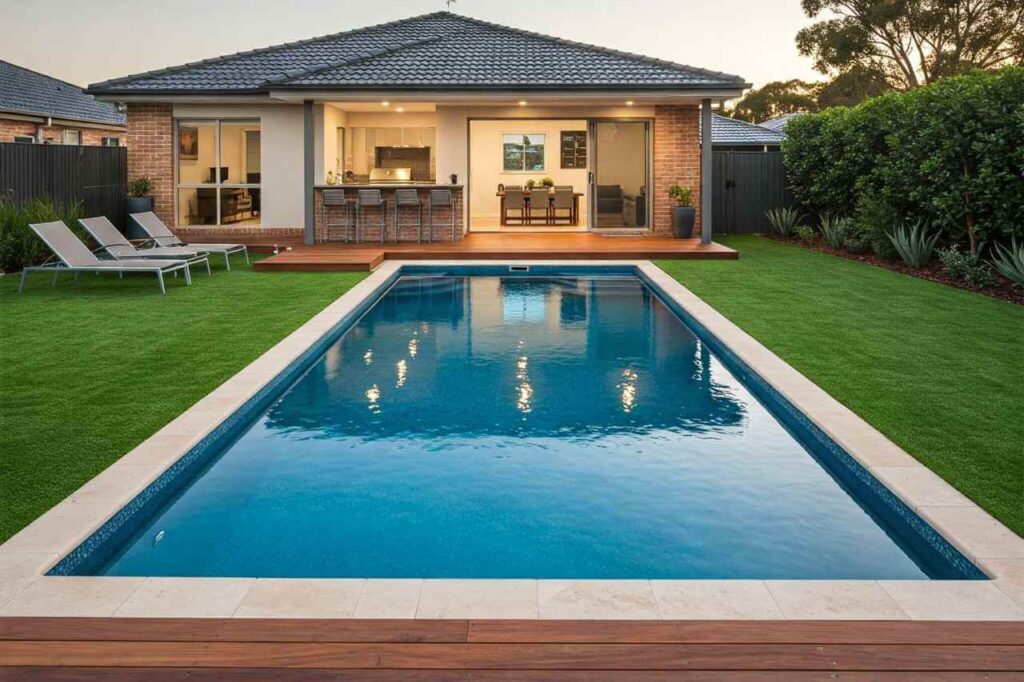
Fibreglass pool is a pre-moulded shell made from reinforced resin and glass fibres. It’s manufactured in a controlled factory environment, then delivered to your home and installed in one piece.
For homeowners planning a large inground fibreglass pool, this approach offers a major advantage. Installation is faster, cleaner, and more predictable compared to on-site construction methods.
The surface is smooth, non-porous, and resistant to algae, which reduces cleaning time and ongoing maintenance costs. Unlike concrete pools, which are built and cured on-site over several months, fibreglass pools arrive ready to install and can be completed within weeks.
Another key benefit is flexibility. Fibreglass shells can slightly adjust to ground movement, helping prevent cracking over time especially important for sandy or shifting soils commonly found across the Sunshine Coast.
Most fibreglass pools also come with structural warranties of up to 25 years, making them a reliable long-term investment for full-size residential pools.
Pool Material Comparison
| Type | Installation Time | Maintenance | Durability |
|---|---|---|---|
| Fibreglass | 4–6 weeks | Low | 20+ years |
| Concrete | 3-6 months | Moderate | 30+ years |
| Vinyl | 4–6 weeks | High (liner replacement) | 10–15 years |
Which Pool Type Is Best for Large Backyards?
For most Sunshine Coast homes, fibreglass offers the best balance between installation speed, durability, and long-term maintenance.
Concrete pools allow full customisation but require longer build times and higher maintenance. Vinyl pools may cost less upfront, but the liner typically needs replacing over time, which adds to long-term expenses.
Fibreglass pools, on the other hand, provide a practical solution for large family pools. The gelcoat surface reflects heat, resists UV damage, and performs well in coastal conditions. Combined with faster installation and lower upkeep, this makes fibreglass a strong choice for homeowners who want a full-size pool without ongoing complexity.
When comparing installation time, maintenance requirements, and long-term durability for full-size backyard pools, understanding concrete vs fibreglass helps homeowners choose the right material based on performance, cost, and lifestyle needs.
The Step by Step Large Fibreglass Installation Process
Step 1: Site Assessment and Council Approvals (1 to 3 weeks)
Before any excavation begins, the first step is a detailed site assessment. For a large inground fibreglass pool, this stage is critical because the size of the pool affects access, placement, and compliance requirements.
Your pool builder will inspect the property to evaluate space, entry points for machinery, soil conditions, and boundary setbacks. This ensures the pool can be delivered and installed safely without delays later in the project.
On the Sunshine Coast, council approvals typically take one to three weeks, depending on documentation and scheduling. Under Queensland’s pool safety standards (AS 1926.1), your design must meet requirements for fencing, drainage, and placement before construction can begin.
During this stage, your builder will:
- Prepare site plans and engineering drawings for submission
- Check property boundaries and underground services
- Ensure the pool layout complies with fencing and safety regulations
Working with a QBCC-licensed fibreglass installer who understands local council processes helps streamline approvals and avoid costly revisions. Getting this step right sets the foundation for a smooth and compliant installation.
Step 2: Excavation and Ground Preparation (1 to 3 days)
Once approvals are in place, excavation begins. Installing a large fibreglass pool requires significant earthworks to accommodate the pool shell, drainage, and engineered foundation. Using heavy earthmoving equipment, your builder excavates the site according to the approved plans. The amount of excavation depends on the pool size, soil conditions, and site access.
The base is then prepared using a compacted 10–20 mm drainage gravel or blue metal bedding layer, providing a stable, free-draining foundation for the pool shell. Depending on the site, sub-soil drainage such as agricultural pipes or sump standpipes may also be installed to manage groundwater and reduce hydrostatic pressure.
Before the shell is delivered, the base is laser-levelled and checked against the manufacturer’s specifications. Accurate preparation at this stage helps ensure the pool remains level, structurally sound, and performs as intended for years to come.
Before excavation begins, factors like slope, drainage, soil type, and access width determine how complex the project will be, so assessing your backyard suitability helps avoid costly delays and unexpected site preparation issues.
Step 3: Delivery and Pool Shell Placement (1 day)
Once the site is prepared, the fibreglass pool shell is delivered to your property. Because full-sized family pools are transported as a single pre-moulded shell, delivery requires careful planning and specialist equipment.
Large fibreglass pools are typically transported on oversize trucks and lifted into position using a heavy mobile crane. Before delivery, your builder will confirm road access, crane setup, overhead powerline clearances, and the lifting area to ensure the installation can be completed safely.
As the shell is lowered into the excavation, it is carefully aligned with the prepared base and checked for level. Once positioned correctly, the shell is secured before plumbing and backfilling begin.
Step 4: Plumbing, Backfill, and Filtration Setup (2 to 4 days)
Once the pool shell is in place, the plumbing and filtration systems are installed. Because large fibreglass pools hold significantly more water than smaller pools, they require higher-capacity equipment to maintain efficient water circulation and filtration.
Your builder will install the plumbing, including dual suction points, multiple return jets, skimmers, and a high-flow variable-speed pump connected to a suitably sized filtration system. Before backfilling begins, all pipework is pressure-tested to check for leaks.
The area around the pool is then backfilled in controlled layers while the pool is filled with water at the same time. This equalises pressure on both sides of the shell, helping maintain its alignment and structural integrity throughout the installation.
On the Sunshine Coast, where sandy soil and humidity are common, proper backfilling and drainage are essential. Done correctly, this stage ensures your pool remains watertight, level, and structurally sound for the long term.
Step 5: Coping, Paving, and Surrounding Works (3 to 5 days)
With the pool structure secured, the project moves into the finishing stage, transforming the area from a construction site into a usable outdoor space.
Coping is installed around the edge of the pool to create a clean transition between the water and surrounding surfaces. From there, paving or decking is added to form the main usable area around the pool.
Material choice plays a big role here. On the Sunshine Coast, it’s important to select finishes that are slip-resistant, UV-stable, and durable in humid conditions. Many homeowners choose stone, concrete, or composite decking depending on the look and maintenance level they prefer.
For larger backyards, this stage also opens up more design flexibility. Instead of just framing the pool, you can create a complete outdoor layout that includes seating areas, shaded zones, and landscaping features that connect the pool with the rest of the space.
When planned properly, these surrounding works don’t just improve appearance — they make the pool safer, easier to use, and more integrated into your daily lifestyle.
Design Tips for Large Backyards
If you have a big outdoor space, consider adding:
- A seating area or poolside pergola for shade.
- LED lighting for nighttime swims.
- Landscaping with tropical plants or privacy screens.
These finishing touches make your fibreglass pool area safer, more inviting, and aligned with your home’s outdoor style. By the end of this step, your pool will look almost complete — ready for water filling and final testing.
Step 6: Filling, Testing, and Balancing the Pool (1 to 2 days)
Once construction is complete, the pool is ready to be filled and prepared for use. For a large fibreglass pool, this process can take one to two days depending on water pressure and pool size.
As the pool fills, your installer will check all systems to ensure everything is working as intended. This includes confirming that the filtration system is circulating water correctly and that there are no leaks in the plumbing.
The water is then balanced to the correct chemical levels. Maintaining the right pH and chlorine levels from the start is important to protect the gelcoat surface and keep the water clear and safe.
A simple guideline to remember:
- Keep pH levels between 7.2 and 7.6
- Test water regularly, especially during warmer months
Once testing and balancing are complete, your pool is ready for use. This is the stage where your installation shifts from construction to enjoyment — your large fibreglass pool is now ready for its first swim.
Step 7: Safety Inspection and Certification (1 to 2 days)
Before your pool can be used, it must pass a final safety inspection. For a large inground fibreglass pool, this step ensures everything complies with Queensland regulations and is safe for everyday use.
A licensed pool certifier will inspect the site, checking that fencing, access points, and safety features meet the required standards. This includes verifying barrier heights, gate latching systems, and non-climb zones around the pool area.
Once everything meets the requirements, you’ll be issued a Form 17 Pool Safety Certificate under QBCC guidelines. This certificate confirms your pool is compliant and legally ready for use.
Most inspections are completed within one to two days, depending on availability. Working with an experienced local builder helps avoid re-inspections and ensures everything is prepared correctly before the certifier arrives.
At this stage, your pool is officially approved; the final step before enjoying your new outdoor space.
Step 8: Timeline Overview and Cost Expectations
Installng a large fibreglass pool on the Sunshine Coast typically takes around four to six weeks, with total costs ranging from $50,000 to $100,000+, depending on size, site conditions, and finishes.
While fibreglass pools are faster to install than concrete, the overall timeline still depends on several factors. Larger pools may require additional time for excavation, access planning, and surrounding works.
Here’s a general breakdown of what to expect:
| Stage | Timeframe | Key Factors |
|---|---|---|
| Site assessment and approvals | 1–3 weeks | Council processing and documentation |
| Excavation and preparation | 1–3 days | Soil conditions and access |
| Shell delivery and placement | 1 day | Crane access and weather |
| Plumbing and backfilling | 2–4 days | Pool size and equipment setup |
| Coping and surrounding works | 3–5 days | Materials and design |
| Filling and testing | 1–2 days | Water pressure and balancing |
| Safety inspection | 1–2 days | Certifier availability |
Compared to concrete pools, which can take several months to complete, fibreglass offers a faster and more predictable installation process. This makes it a practical choice for homeowners who want a full-size pool without long construction delays.
Step 9: Preparing Your Home Before Installation
Before installation begins, preparing your property can help keep the project on schedule and minimise delays. Make sure access to your property is clear for oversize delivery vehicles, heavy machinery, and the mobile crane. Remove parked vehicles, outdoor furniture, and any obstacles that could interfere with excavation or the crane lift. It’s also a good idea to let neighbours know about the scheduled delivery, as temporary road access restrictions or increased site activity may occur.
Keep children and pets away from the work area throughout construction, and confirm that water and power are available for the installation team. Before work begins, check that all approvals, permits, and insurance requirements are in place.
Taking these simple steps helps ensure your large fibreglass pool installation proceeds safely and efficiently.
Conclusion
Installing a large fibreglass pool is one of the fastest and most practical ways to create a spacious outdoor area for swimming, entertaining, and family living. With proper planning and an experienced installer, most projects can be completed in as little as 4 to 6 weeks.
At Plunge Pools Sunshine Coast, we install both compact plunge pools and full-sized fibreglass family pools. This guide has focused specifically on larger pool installations, where excavation, transport logistics, crane lifts, and high-capacity equipment require careful planning and experienced project management.
If you’re planning a large fibreglass pool on the Sunshine Coast, contact our team to arrange a site assessment and receive expert advice tailored to your property.
FAQs
How does a fibreglass pool compare to a concrete pool in durability and design flexibility?
A large fibreglass pool installs much faster than concrete and requires significantly less maintenance over time. While concrete pools offer full design flexibility, they take longer to build and need more upkeep to maintain their surface.
Fibreglass pools come as pre-moulded shells, so design options are more standardised. However, they are smooth, resistant to algae, and less prone to surface cracking. For most Sunshine Coast homes, fibreglass offers a better balance between durability, maintenance, and installation time.
Are there eco-friendly or energy-efficient options for fibreglass pools on the Sunshine Coast?
Yes. Modern fibreglass pools can be equipped with energy-efficient systems that reduce long-term running costs. These include variable-speed pumps, solar or electric heating, and efficient filtration systems. The smooth gelcoat surface also helps reduce chemical use by limiting algae growth. For larger pools, choosing the right equipment size and efficiency level is important to keep energy use under control.
What are the most common problems homeowners face after fibreglass pool installation, and how can they be prevented?
Most issues after installation are minor and related to maintenance rather than structure. Common problems include water imbalance, staining, and poor drainage around the pool area. These can usually be avoided by maintaining proper water chemistry, ensuring good drainage during installation, and servicing equipment regularly. For large pools, consistent maintenance becomes even more important due to the higher water volume and system load.
Can fibreglass pools be renovated, resized, or resurfaced in the future?
Yes. While the pool shell itself cannot be easily resized, most fibreglass pools can be updated over time. Common upgrades include resurfacing the gelcoat, replacing coping and paving, upgrading lighting, and adding new equipment such as heating or automation systems. These improvements can extend the life of your pool and keep it looking modern without requiring a full rebuild.