At Plunge Pools Sunshine Coast, we help local homeowners keep their plunge pools clean and running properly in coastal conditions. Our team works with Plungie pools across the region, so we understand what it takes to maintain them properly in real backyards.
In this guide, you will learn exactly how to maintain your Plungie step by step. We will cover your routine, water chemistry, filtration system, seasonal care, and key decisions so you can keep your pool in perfect condition all year. You can also check out our step-by-step guide for a quick reference anytime.
What Does Maintaining a Plungie Mean?
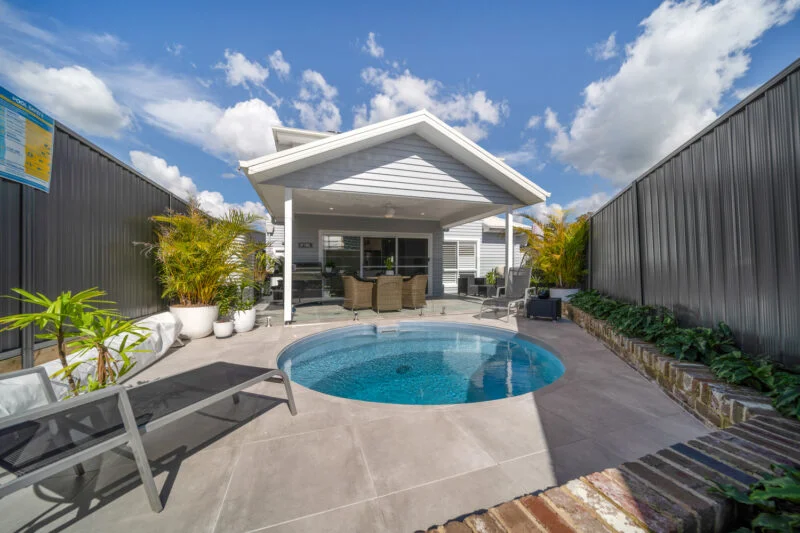
Maintaining a Plungie means keeping the pool water clean, chemically balanced, and safe for swimming.
This includes:
- Clean water – Free from debris
- Balanced water – Correct pH and chlorine
- Safe water – Free from bacteria and algae
When these work together, your pool becomes easy to manage.
Why Plungie Pools Are Lower Maintenance
Plungie pools are lower maintenance because their precast concrete shell and ecoFinish surface reduce cleaning, chemical use, and long-term upkeep.
Plungie pools are designed to simplify pool ownership. Because they use a precast concrete plunge pool structure, the shell is built in a controlled environment, making it stronger, denser, and less prone to cracks compared to many traditional in-ground pools. This stability helps prevent issues like leaks, surface damage, and costly repairs over time.
The ecoFinish interior coating is another key reason why Plungie pools are easier to maintain. It creates a smooth, non-porous surface that resists algae growth and staining. This means:
- Less scrubbing is needed to keep the pool clean
- Lower risk of algae buildup in plunge pools
- Easier removal of dirt and debris
With plumbing configuration, filtration systems, and ecoFinish application all affecting maintenance requirements and overall pool lifespan, professional Plungie pool installation helps you deliver more dependable results in Sunshine Coast environments.
Simple Plungie Maintenance Routine
Maintaining a Plungie doesn’t require hours of work each week. A simple routine focused on water chemistry, filtration and equipment checks will help keep your pool clean, efficient and ready to use throughout the year.
Daily Checks
Spend a few minutes checking that:
- The water is clear and circulating properly.
- The pump and sanitising system are operating normally.
- The water level remains around the middle of the skimmer opening to ensure efficient circulation.
If you notice cloudy water, reduced circulation or unusual equipment noise, investigate the cause early before it develops into a larger issue.
Weekly Maintenance
Your weekly routine should focus on keeping the water balanced and ensuring the filtration system is operating efficiently.
This includes:
- Testing and adjusting water chemistry.
- Emptying the skimmer and pump baskets.
- Inspecting the cartridge filter for reduced water flow or increased pressure.
- Checking the pump, chlorinator and other equipment for signs of leaks or wear.
For a complete weekly maintenance schedule, including cleaning routines and recommended equipment inspections, see our Plunge Pool Maintenance Guide.
Monthly Inspection
Once a month, perform a more thorough inspection of your Plungie system by:
- Cleaning the cartridge filter if required.
- Inspecting valves, pipework and equipment connections.
- Checking the operation of timers or pool automation systems.
- Looking for signs of leaks, corrosion or worn components.
Regular inspections help identify minor issues before they affect water quality or lead to unnecessary repairs.
Keep Your Water Level Correct
Plungie skimmer boxes include an integrated overflow drain positioned around the halfway point of the skimmer opening.
Maintaining the water level close to this point allows the skimmer to remove floating debris efficiently. Filling the pool above the overflow simply allows excess water to drain away, wasting water without improving pool performance.
Plungie Water Chemistry
Maintaining the correct water chemistry is one of the most important parts of caring for your Plungie. Balanced water helps protect the ecoFinish interior, keeps the water safe for swimming, and extends the life of your filtration equipment and heating system.
Plungie provides recommended water chemistry targets designed specifically for its precast concrete pools and ecoFinish surface. Testing your water regularly and keeping it within these ranges helps maintain water quality while reducing the risk of staining, scaling and equipment damage.
Recommended Water Chemistry Levels
| Parameter | Recommended Range | Ideal Target |
|---|---|---|
| pH | 7.2–7.6 | 7.4 |
| Free Chlorine | 2–4 ppm | 2–4 ppm |
| Total Alkalinity | 100–200 ppm | 120 ppm |
| Calcium Hardness | 200–300 ppm | 205 ppm |
| Stabiliser (Cyanuric Acid) | 30–50 ppm | 30–50 ppm |
Maintaining these levels helps prevent corrosion, scale build-up and unnecessary wear on your pool equipment while keeping the ecoFinish coating in excellent condition.
Protecting Your ecoFinish Surface
Every Plungie pool is finished with ecoFinish, a durable thermopolymer coating designed to provide a smooth, attractive and long-lasting interior. While highly resistant to staining and algae growth, it still relies on properly balanced water to maintain its appearance and performance.
Allowing the water chemistry to remain outside the recommended ranges for extended periods can increase the risk of staining, scaling and premature surface deterioration. Consistent testing and timely chemical adjustments are the best way to protect your investment.
Plungie also recommends maintaining a maximum water temperature of 34°C. Exceeding this temperature may damage the ecoFinish coating and could affect your warranty.
Choose Quality Pool Chemicals
Not all pool chemicals are manufactured to the same standard. Lower-quality products may contain trace metals and impurities that can stain the ecoFinish surface or contribute to corrosion of heaters and other pool equipment.
For the best long-term results, use high-quality pool chemicals from reputable suppliers and always follow the manufacturer’s dosing recommendations. Avoid mixing different chemical brands unless the products are confirmed to be compatible.
When Should You Adjust Your Water Chemistry?
Test your water at least once a week and after periods of heavy rainfall, high pool usage or extremely hot weather. Adjust your water chemistry whenever any reading falls outside the recommended range. Small corrections made early are usually easier and more cost-effective than correcting major imbalances later.
Looking After Your ecoFinish Surface
The ecoFinish coating is one of the defining features of a Plungie pool. This durable thermopolymer finish provides a smooth, attractive surface that resists algae growth and staining while creating a comfortable swimming experience.
Although ecoFinish is designed for long-term durability, proper water chemistry and regular care are essential to keep it performing as intended.
Maintain Balanced Water Chemistry
Keeping your water within Plungie’s recommended chemical ranges is the best way to protect the ecoFinish surface.
Poorly balanced water can lead to:
- Surface staining
- Scale build-up
- Premature surface deterioration
- Reduced equipment life
Regular testing and timely chemical adjustments help preserve both the appearance of the pool and the performance of your filtration system.
Avoid Abrasive Cleaning Methods
The ecoFinish coating should only be cleaned using equipment and products suitable for finished pool surfaces.
Avoid:
- Abrasive scourers or steel wool
- Harsh cleaning chemicals not intended for swimming pools
- Metal brushes or sharp scraping tools
Instead, use a soft pool brush and approved pool cleaning products when routine cleaning is required.
Use Quality Pool Chemicals
Always use quality pool chemicals from reputable manufacturers. Some low-cost chemicals may contain trace metals and impurities that can stain the ecoFinish surface or contribute to corrosion of heaters and other pool equipment over time.
Using compatible products and following the recommended dosing instructions helps protect your Plungie and supports long-term performance.
Keep Water Temperature Within Specifications
Plungie recommends maintaining a maximum water temperature of 34°C. Water temperatures above this limit may damage the ecoFinish coating and could affect your warranty. If your pool is fitted with a heater, regularly check the temperature settings to ensure they remain within the manufacturer’s recommendations.
How to Check if Your Plungie Has a Leak
Some water loss is completely normal. Evaporation, particularly during hot, dry or windy weather, can cause your Plungie to lose around 3–7 mm of water per day. If you notice the water level dropping faster than expected, you can perform a simple bucket test to determine whether the loss is caused by normal evaporation or a possible leak.
How to Perform the Bucket Test
- Fill a bucket with pool water until it matches the water level inside your Plungie.
- Place the bucket on a pool step or secure it where it remains partially submerged.
- Mark the water level inside the bucket and the pool water level on the outside of the bucket.
- Leave the pool unused for 24 hours with the filtration system operating normally.
- Compare both water levels after 24 hours.
Understanding the Results
- If the pool and bucket lose the same amount of water, the loss is most likely due to normal evaporation.
- If the pool water drops noticeably more than the bucket, your Plungie may have a leak that requires further investigation.
If you suspect a leak, inspect visible plumbing connections, valves and equipment for signs of water loss. If no obvious cause can be found, contact your pool builder or a qualified technician for a professional assessment.
How Your Plungie Filtration System Works
Your Plungie filtration system continuously circulates water through the pump, cartridge filter and sanitising system to remove debris, distribute chemicals evenly and maintain clean, healthy water.
While the filtration process is straightforward, regular maintenance is essential to keep the system operating efficiently and to protect your pool equipment.
Key Components
A typical Plungie filtration system consists of four main components:
- Pump – Draws water from the pool and circulates it through the filtration system.
- Cartridge Filter – Captures fine dirt, leaves and suspended particles before returning clean water to the pool.
- Sanitising System – Usually a salt chlorinator or chlorine dosing system that maintains safe sanitiser levels.
- Skimmer Box – Collects floating debris before it reaches the pump and filter.
Each component works together to maintain water clarity and reduce the amount of manual cleaning required.
Recommended Pump Runtime
Running the filtration system for the appropriate amount of time each day helps maintain water quality and prevents stagnant water.
As a general guide:
- Summer: 6–8 hours per day
- Winter: 4–6 hours per day
During periods of heavy pool use, extreme heat or after heavy rainfall, you may need to increase the runtime to maintain consistent water circulation.
Caring for Your Cartridge Filter
Most Plungie pools are supplied with a cartridge filtration system, such as the Hayward C200S cartridge filter. Cartridge filters capture very fine particles without requiring backwashing, making them efficient and water-saving.
Inspect the cartridge regularly and clean it whenever you notice reduced water flow or an increase in filter pressure. Cleaning intervals vary depending on pool usage and surrounding vegetation, but many homeowners find a monthly inspection sufficient under normal conditions.
When cleaning the cartridge:
- Remove the cartridge following the manufacturer’s instructions.
- Hose it thoroughly from top to bottom to remove trapped debris.
- Allow it to dry before reinstalling if recommended by the manufacturer.
- Replace the cartridge when it becomes damaged or no longer cleans effectively.
A clean cartridge improves water circulation, reduces strain on the pump and helps maintain balanced water chemistry.
Signs Your Cartridge Filter Needs Cleaning
Your cartridge filter may require cleaning if you notice:
- Reduced water flow from the return jets
- Cloudy or dull-looking water
- A higher-than-normal pressure gauge reading
- The pump working harder than usual
Addressing these signs early helps maintain efficient filtration and reduces unnecessary wear on your pool equipment.
How to Prevent Algae in Your Plungie
The best way to prevent algae in your Plungie is to maintain balanced water chemistry, run the filtration system consistently and keep the cartridge filter clean. When these three areas are managed properly, algae is far less likely to develop.
Maintain Balanced Water Chemistry
Water chemistry plays the biggest role in preventing algae growth. Test your pool regularly and keep the pH, chlorine, alkalinity and calcium hardness within Plungie’s recommended ranges to maintain a healthy swimming environment and protect the ecoFinish surface.
Small adjustments made early are usually much easier than correcting a heavily imbalanced pool.
Keep Water Circulating
Poor circulation creates areas where algae can begin to grow. Run your filtration system for the recommended number of hours each day so sanitiser is distributed evenly throughout the pool.
During periods of hot weather, heavy rainfall or increased pool use, longer pump runtimes may be required to maintain water quality.
Keep the Cartridge Filter Clean
A clean cartridge filter allows water to circulate efficiently and removes fine particles before they affect water quality. Inspect the filter regularly and clean it whenever water flow decreases or the filter pressure rises above its normal operating level.
Ignoring a dirty filter reduces circulation and places additional strain on your pool equipment.
Prevent Cross-Contamination
If you’ve recently treated algae, clean any equipment that has been in contact with the affected water before using it again.
Pool brushes, leaf rakes, vacuum heads, pool toys and other accessories can carry algae spores back into the pool, increasing the risk of another outbreak if they are not cleaned thoroughly.
If Algae Appears
If your Plungie develops green water, black algae, mustard algae or persistent staining, treat the problem promptly before it spreads.
For a complete guide to identifying algae types, shock treatments, recovery methods and long-term prevention, read our Keeping a Fibreglass Pool Algae-Free guide.
What Are the Best Tools for Plungie Maintenance?
Using the right equipment makes maintaining your Plungie simpler, improves water quality and reduces the amount of manual work required. Most Plungie pools are supplied with quality filtration equipment, with optional upgrades available depending on the equipment package selected.
Plungie Equipment Packages
Plungie offers different equipment packages to suit different levels of automation and convenience.
Base Package
The Base package includes the essential equipment needed to keep your pool operating safely and efficiently, including the pump, cartridge filter and sanitising system. It is a practical option for homeowners who are happy to manually monitor water chemistry and manage routine maintenance.
Eco Package
The Eco package builds on the standard equipment with energy-efficient components, helping reduce electricity consumption while maintaining effective water circulation and filtration. This package is well suited to homeowners looking for lower running costs without adding complex automation.
Smart Eco Package
The Smart Eco package incorporates additional automation features, including variable-speed pump technology and smart control systems that help optimise filtration cycles and sanitiser operation. Automated control reduces the need for manual adjustments while maintaining more consistent water quality throughout the year.
Essential Maintenance Equipment
In addition to your Plungie equipment package, these accessories help simplify routine maintenance:
- Water test kit for monitoring water chemistry.
- Cartridge filter cleaning hose nozzle for washing the filter element.
- Pool brush for cleaning walls, steps and corners.
- Robotic pool cleaner to reduce manual vacuuming.
- Leaf rake or skimmer net for removing larger debris when required.
Using the correct maintenance equipment helps protect the ecoFinish surface while reducing unnecessary wear on your filtration system.
Choose Equipment Designed for Your Plungie
Always use replacement cartridges, chemicals and maintenance products that are compatible with your Plungie equipment and ecoFinish coating. Following the manufacturer’s recommendations helps maintain efficient filtration, protects your pool equipment and supports long-term warranty performance.
How Much Does It Cost to Maintain a Plungie?
Most owners spend $700–$2,000 per year.
Typical Costs
| Category | Cost (Per Year) |
| Chemicals | $300–$800 |
| Electricity | $300–$900 |
| Maintenance | $100–$500 |
How to Keep Costs Low
The best way to keep plunge pool maintenance costs low is to stay consistent with weekly care, balanced water, clean filters, and early fixes.
Following simple tips for maintaining your pool can prevent unnecessary expenses.
Maintain Weekly
A simple weekly plunge pool maintenance routine keeps everything under control:
- Skim debris
- Test water
- Check equipment
This avoids buildup and reduces the need for costly deep cleans or chemical corrections.
Keep Water Balanced
Balanced plunge pool water chemistry means:
- Less chemical waste
- Lower risk of algae
- Protection for your pool surface and equipment
When pH and chlorine levels stay stable, your pool runs more efficiently and costs less over time.
Clean Filters Regularly
Your plunge pool filtration system works harder when the filter is dirty. Regular cleaning:
- Improves water circulation
- Reduces strain on the pump
- Keeps energy use lower
A clean filter is one of the easiest ways to reduce ongoing maintenance costs.
Fix Issues Early
Small issues become expensive if ignored. Acting early on:
- Cloudy water
- Weak flow
- Chemical imbalances
Prevents major repairs, equipment failure, and full pool treatments.
DIY vs Professional Plungie Maintenance
Most Plungie owners can confidently manage routine maintenance themselves. Regular water testing, cartridge filter cleaning, equipment inspections and chemical adjustments are straightforward tasks when performed consistently.
However, professional servicing can be beneficial for more complex maintenance or if you’re unsure whether your equipment is operating correctly.
Professional servicing may include:
- Inspecting pumps, filters and chlorinators
- Checking valves, pipework and equipment connections
- Testing and confirming water chemistry
- Identifying worn or damaged components before they fail
- Servicing equipment according to the manufacturer’s recommendations
Many homeowners choose a balanced approach by completing routine weekly maintenance themselves and arranging a professional inspection once or twice a year to help keep their Plungie operating at its best.
How Does Seasonal Maintenance Change for a Plungie Pool?
Seasonal plunge pool maintenance changes by increasing care in summer and maintaining consistency in winter to keep water clean and balanced.
Summer
- Run the pump longer
- Test the water more often
- Watch for algae
Winter
- Maintain routine
- Run pump daily
- Do not neglect cleaning
How Long Does a Plungie Last?
A Plungie pool typically lasts 20–30+ years for the structure, 10–20+ years for the surface, and 5–12 years for the equipment.
- Structure: 20–30+ years
- Surface: 10–20+ years
- Equipment: 5–12 years
With proper care, these lifespans can extend even further. To help prevent equipment failures, water quality issues, and costly maintenance down the track, understanding the real Plungie installation timeline allows you to better coordinate plumbing, drainage, and filtration preparation early in the project.
Final Maintenance Checklist
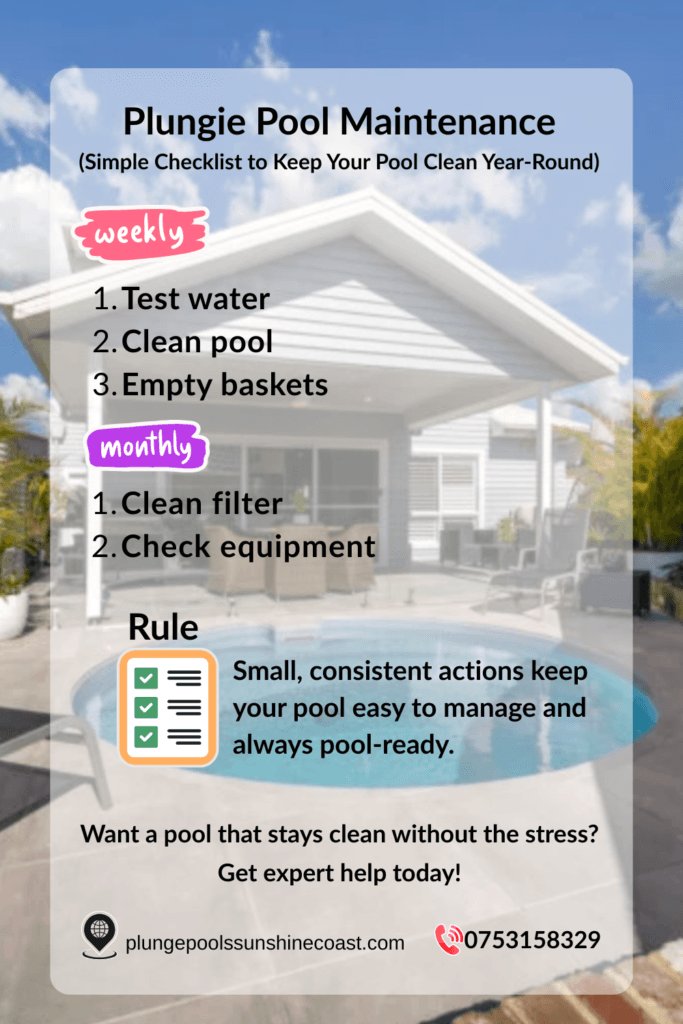
Conclusion
Maintaining a Plungie is straightforward when you follow a consistent routine and use the correct equipment, water chemistry and maintenance practices. Regular testing, proper cartridge filter maintenance and balanced water chemistry help protect the ecoFinish surface, keep your pool equipment operating efficiently and ensure your Plungie remains clean, safe and ready to enjoy throughout the year.
If you have questions about maintaining your Plungie or need advice on servicing, filtration equipment or water chemistry, the team at Plunge Pools Sunshine Coast is here to help. Whether you’re planning a new installation or looking after an existing Plungie, we can provide practical advice tailored to your pool and local conditions.
FAQs
1. How often should I test my Plungie water in summer and winter?
Test your Plungie water at least twice a week during summer and once a week during winter. Hot weather, increased pool use and heavy rainfall can quickly affect water chemistry, so more frequent testing may be required during these periods. Keep your water within Plungie’s recommended ranges to protect the ecoFinish surface and maintain safe swimming conditions.
2. What is the fastest way to fix cloudy pool water without draining it?
Cloudy water is usually caused by poor filtration, unbalanced water chemistry or fine particles suspended in the water. Start by testing and balancing your water chemistry, then inspect and clean the cartridge filter if required. Continue running the filtration system until the water clears. If the problem persists after correcting the water chemistry and cleaning the filter, inspect your equipment for reduced water flow or consult a pool professional.
3. Why does my Plungie keep going green even after I fix it?
Recurring algae is often caused by an underlying issue that hasn’t been resolved, such as inconsistent water chemistry, inadequate filtration or poor water circulation. After treating algae, remember to clean any pool brushes, vacuum heads, leaf rakes and pool toys that came into contact with the affected water. These items can carry algae spores back into the pool and contribute to another outbreak.
4. Is a robotic pool cleaner worth it for a Plungie?
For many homeowners, yes. A robotic pool cleaner helps remove dirt and fine debris while reducing the amount of manual vacuuming required. Although it doesn’t replace regular water testing or cartridge filter maintenance, it can significantly reduce the time spent on routine cleaning.
5. Should I maintain my Plungie myself or hire a professional?
Most Plungie owners can confidently complete routine maintenance, including testing water chemistry, cleaning the cartridge filter and inspecting pool equipment. However, arranging a professional service once or twice a year can help identify worn components, confirm your equipment is operating efficiently and address potential issues before they become costly repairs.
6. Does ecoFinish require any special maintenance?
Yes, but it’s straightforward. The ecoFinish surface is designed to be durable and resistant to staining and algae growth, but it performs best when the water chemistry remains within Plungie’s recommended ranges. Avoid abrasive cleaning tools, use quality pool chemicals and keep the water temperature below 34°C to help protect the finish and maintain its long-term appearance.