At Plunge Pools Sunshine Coast, we design and install plunge pools for local homeowners who want safe and long-lasting results. As top plunge pool experts, we understand the local soil conditions, coastal winds, and site challenges across the Sunshine Coast. Our team focuses on building pools that stay level, handle the load correctly, and remain stable over time, supporting modern backyard transformations.
In this guide, you will learn the most common above-ground plunge pool problems, why they happen, and how to prevent them. We will explain level issues, load limits, wind risks, and other key factors so you can plan your pool the right way from the start.
Why Above-Ground Plunge Pools Fail More Often Than You Think
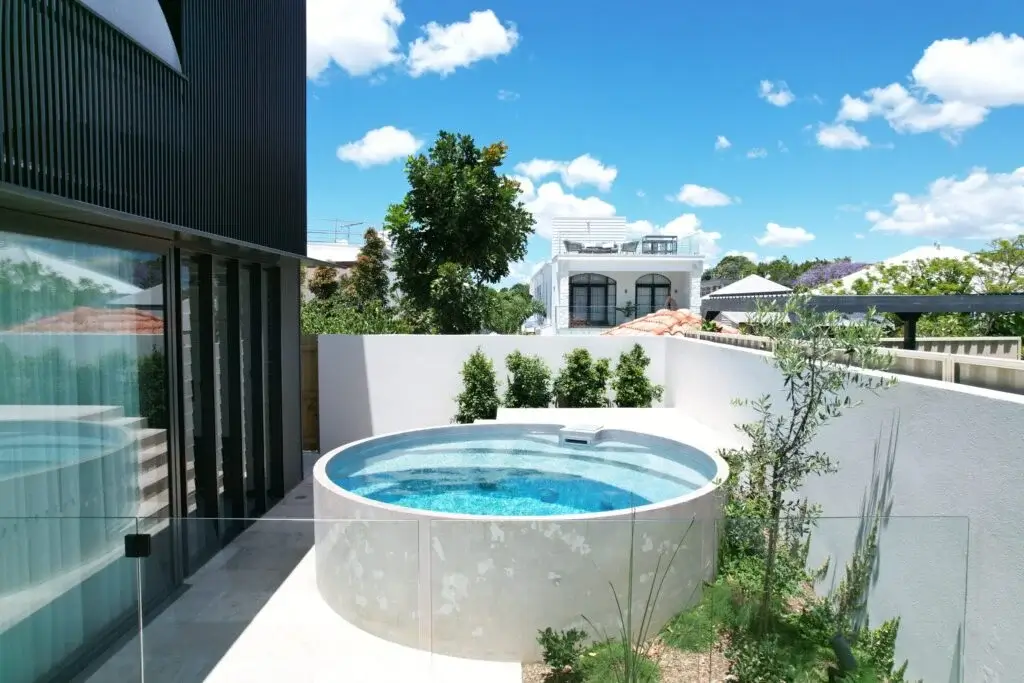
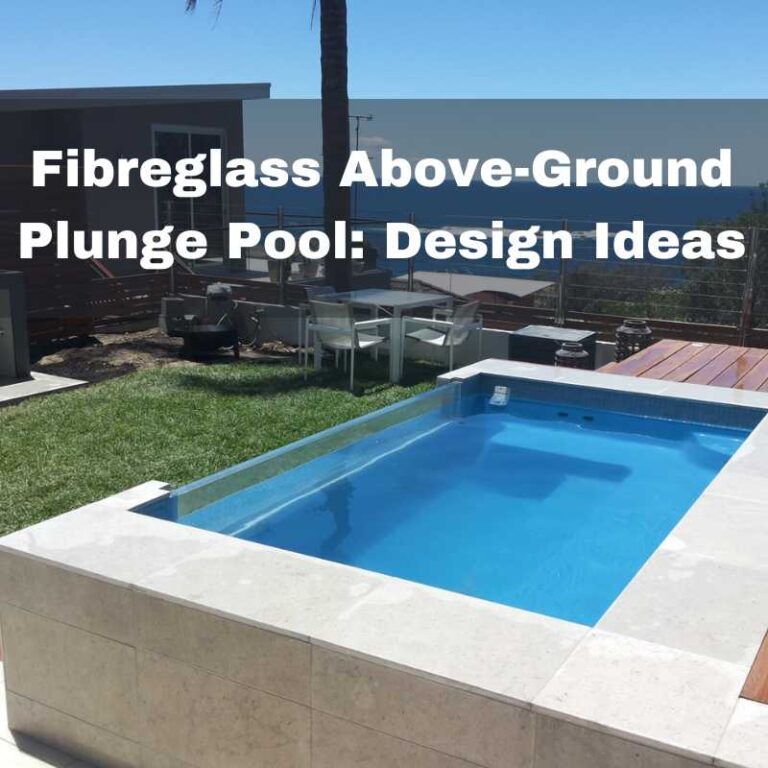
Because they sit on top of the ground, not inside it.
An in-ground swimming pool is supported by soil around it. An above-ground pool relies only on its base and the ground underneath.
How the weight works
Water is very heavy.
- 1 cubic metre of water = about 1,000 kg
- A small plunge pool can weigh several tonnes
That weight must be spread evenly.
If it is not:
- The ground compresses
- The pool tilts
- The structure becomes stressed
Key takeaway
Above-ground pools fail when:
- The base is weak
- The soil cannot hold the load
- The structure is not supported properly
Level Problems: The #1 Cause of Pool Failure
A pool that is not level will fail because uneven weight puts stress on the structure, causing bulging walls, cracks, leaks, and in severe cases, collapse.
What happens if a pool is not level?
- One side holds more weight
- Walls bulge or crack
- Liners stretch or tear
- Pipes shift or leak
- The pool may collapse in severe cases
Common causes of level issues
- Sand-only base (moves over time)
- Poor compaction (ground settles)
- Reactive clay soil (expands and shrinks)
- No site inspection by a qualified installer
Visit our above ground plunge pool service, and see how we can help you.
Best way to build a level base
- Compacted crushed rock
- Concrete slab (for higher strength)
- Plate compactor to remove air gaps
- Laser levelling for accuracy
How level should it be?
The pool must be level within a few millimetres.
Even small errors can grow over time and affect the fitting of structural components.
Signs your pool is moving
- Uneven waterline
- Visible tilt
- Cracks or bulging
- Gaps at the base
Load Risks: Why Water Weight Causes Failure
Load risk happens when the ground cannot support the total weight of the pool, causing sinking, cracking, or sudden structural failure.
What makes up the total load?
- Water weight
- Pool structure
- People using the pool
- Movement in the water
Distributed vs point load (simple)
- Distributed load = weight spread evenly
- Point load = weight concentrated in one spot
Point loads cause sinking and cracks.
What happens when the load is too high?
- Ground compresses
- The pool sinks unevenly
- Structure cracks
- In extreme cases, failure happens suddenly
High-risk installations
- Decks or raised platforms
- Sloped blocks
- Soft or unstable soil
When you need an engineer
- Elevated pools
- Large or heavy designs
- Sloping or reactive sites
Wind Risks: The Hidden Problem Most People Miss
Wind can damage an above-ground pool by pushing, lifting, or shifting the structure, especially when it is exposed or empty.
Can wind damage an above-ground pool?
Yes. Wind can push, lift, or shift the pool.
Why wind is a problem
Above-ground pools are exposed.
Wind creates:
- Side pressure on walls
- Uplift force
- Movement when the pool is empty
High-risk locations
- Coastal areas
- Elevated blocks
- Open yards
- Ridgelines
How to reduce wind risk
- Install anchors
- Use fencing or walls as windbreaks
- Place the pool in a sheltered area within your landscape
- Keep the pool filled when possible
How do ground and drainage problems affect an above-ground pool?
Poor drainage causes the soil to soften and lose strength, leading to pool movement, sinking, or tilting over time.
What happens if drainage is poor?
- Soil becomes soft
- Ground loses strength
- The pool starts to sink or tilt
Why drainage matters
Water in the ground weakens support.
Over time, this causes movement and can even clog drainage systems if not managed properly.
Simple drainage solutions
- Gravel base
- French drains
- Proper ground slope
Warning signs
- Water is pooling near the pool
- Soft or muddy ground
- Gaps under the base
How do design mistakes impact the safety, maintenance, and performance of an above-ground pool?
Design mistakes in an above-ground pool reduce safety, make maintenance harder, and lower long-term performance. Poor layout, wrong sizing, and bad equipment placement can lead to accidents, inefficient cleaning, and faster wear over time.
Common mistakes
- Not enough space around the pool
- Poor equipment placement (like Pump, Skimmer, or Heater)
- Wrong pool size for the yard
Why this matters
These issues can:
- Reduce safety
- Make maintenance harder
- Affect long-term performance
How do structural weaknesses and material choice affect an above-ground pool’s lifespan?
Stronger pool materials last longer because they handle water pressure, weather, and movement better, while weaker materials fail faster under stress.
Many modern fibreglass pools used in outdoor pools offer durability and resistance to cracking compared to weaker systems.
Which pool materials last longer?
Stronger materials last longer and handle pressure better.
| Material | Strength | Lifespan | Common Issue |
| Steel | High | Medium | Rust |
| Resin | Medium | Medium | UV damage |
| Inflatable | Low | Short | Punctures |
Typical lifespan
- Inflatable: 1–3 years
- Frame pools: 5–15 years
- High-quality systems: 15+ years
Take a look at our detailed comparison between concrete and fibreglass plunge pool.
How do water quality and maintenance issues affect an above-ground pool?
Poor water care and maintenance damage the pool system by causing algae growth, equipment failure, corrosion, and unsafe swimming conditions.
Why maintenance matters
Poor maintenance can damage the pool system and affect the plunge pool water quality.
What happens if you ignore it?
- Algae growth
- Equipment damage
- Corrosion or scaling from Calcium buildup
- Surface stain issues
- Unsafe water
Basic needs
- Good circulation
- Proper filtration (avoiding poor filtration)
- Balanced chemicals and correct sanitiser levels
- Regular water testing
- Monitoring overall water chemistry
Without this, water can become Imbalanced, leading to ongoing issues and poor filtration performance.
Proper maintenance ensures your pool remains crystal clear and extends equipment life.
Compliance & Safety (Queensland)
Do above-ground pools need a fence?
Yes. If the pool holds more than 300 mm of water.
Key rules
- Fence at least 1200 mm high
- Self-closing gate
- No climbable objects nearby
Why this matters
Non-compliance can lead to:
- Fines
- Failed inspections
- Safety risks
Take a look our guide for safe plunge pool installations before deciding to install your dream pool.
Above-Ground vs In-Ground Pools
Above-ground pools are more sensitive to site conditions, while small in-ground pools are more stable, durable, and lower risk long term.
| Factor | Above-Ground | In-Ground |
| Stability | Lower | Higher |
| Wind Risk | High | Low |
| Lifespan | Shorter | Longer |
| Installation Risk | Higher | Lower |
Key takeaway
Above-ground pools are more sensitive to site conditions.
If you are wondering if fibreglass material can also installed above ground, check out our article Can fibreglass pools be installed above ground.
When an Above-Ground Pool Is a Good Choice
An above-ground pool is a good choice when you need a lower-cost, fast-to-install, or temporary pool solution, especially on sites where excavation is difficult. Read more here about portable vs permanent plunge pools
With the right design and support from experienced pool builders, an above-ground plunge pool stays stable and performs well over time.
Why above-ground plunge pools still make sense
Above-ground plunge pools are not always a bad option. In the right situation, they can be practical, cost-effective, and quick to install.
They are commonly chosen for:
- Budget-conscious homeowners
- Fast backyard upgrades
- Temporary or removable pool setups
- Sites with access or excavation challenges
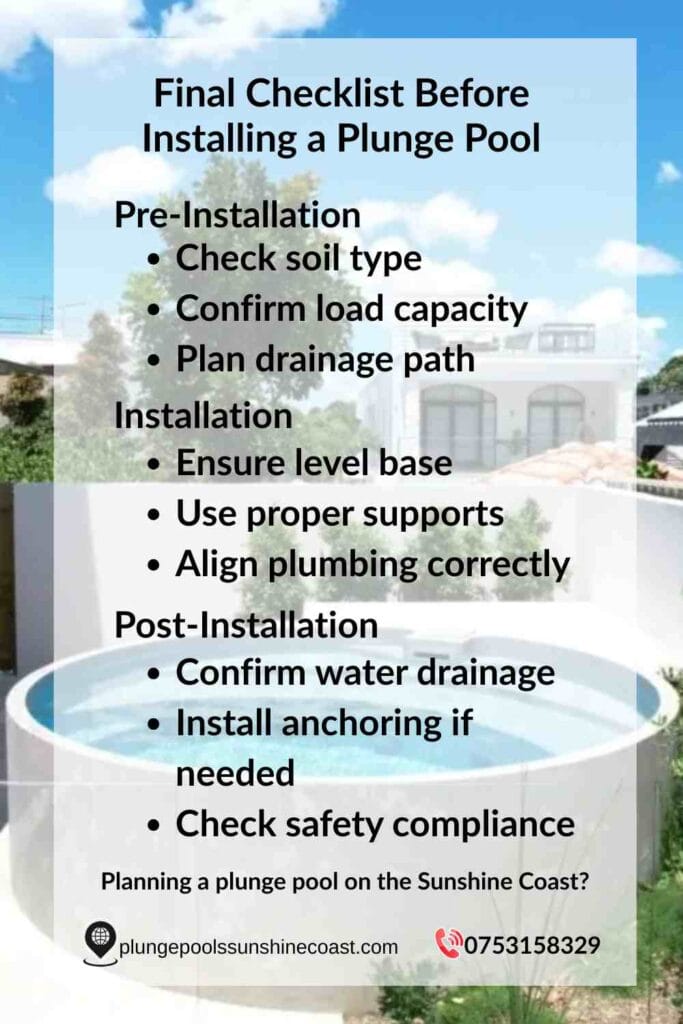
Final Checklist Before Installing
Conclusion
Most above-ground plunge pool problems come down to level issues, load limits, and wind exposure. These risks are not random. They are usually the result of poor planning or incorrect installation.
If you are planning a pool on the Sunshine Coast, it is important to consider local soil, weather, and site conditions. Getting expert advice early can help avoid costly mistakes later.
Reach out to Plunge Pools Sunshine Coast and mention your interest in our services. Our team can guide you through the right design and installation approach for your site.
FAQs
1. How level does an above-ground plunge pool need to be
An above-ground plunge pool needs to be almost perfectly level, usually within a few millimetres across the base. Even small tilts create uneven pressure, which can lead to wall stress, movement, and long-term structural damage.
2. What is the best base for an above-ground plunge pool to prevent sinking?
The best base is a compacted crushed rock foundation or a reinforced concrete slab. These materials spread the load evenly and resist movement, helping prevent sinking, shifting, and long-term instability.
3. Can an above-ground plunge pool collapse if the ground cannot handle the load?
Yes, an above-ground plunge pool can collapse if the ground cannot support the load. When soil fails, the base sinks unevenly, which can lead to structural cracking, wall failure, or sudden collapse in severe cases.
4. How do strong winds affect above-ground plunge pools on the Sunshine Coast?
Strong winds can push, shift, or destabilise above-ground plunge pools, especially in exposed areas. On the Sunshine Coast, coastal winds increase this risk, particularly when the pool is empty or not properly anchored.
5. What are the early signs that an above-ground plunge pool is starting to fail?
Early signs include an uneven waterline, visible tilting, cracks or bulging walls, and soft ground around the base. These indicate movement and should be addressed early to prevent more serious structural problems.