For homeowners planning a large inground pool, these trade-offs become even more important. What looks like a simple decision at the start can impact how much time, money, and effort you spend over the life of your pool.
At Plunge Pools Sunshine Coast, we design and install full-size fibreglass pools built for local conditions from coastal soil to sloped blocks and tight-access sites. Our goal is to make the process clear, so you know exactly what to expect before you commit.
In this guide, we break down the real pros and cons of fibreglass pools, so you can decide whether it fits your backyard, your budget, and how you want to use your pool long-term.
Fibreglass pool pros & cons at a glance
| Key Advantages | Main Limitations |
|---|---|
| Fast Installation: Typically completed within 4–8 weeks after site preparation. | Fixed Designs: Limited to manufacturer moulds rather than fully custom shapes. |
| Low Maintenance: Smooth gelcoat surface resists algae and reduces chemical use. | Transport Restrictions: Pool dimensions are limited by road transport regulations. |
| Long-Term Value: No liner replacements or resurfacing required. | Higher Upfront Cost: Greater initial investment than vinyl liner pools. |
| Flexible Structure: Handles minor ground movement and coastal soil conditions. | Installation Precision: Proper levelling and engineered backfilling are essential. |
Planning a Small Backyard Project Instead?
If you have a compact backyard, courtyard, narrow side access, or a sloping block, a plunge pool may be a better solution. We’ve created a dedicated guide comparing fibreglass plunge pools and precast concrete plunge pools to help you choose the right option for your space.
What is a Fibreglass Pool?
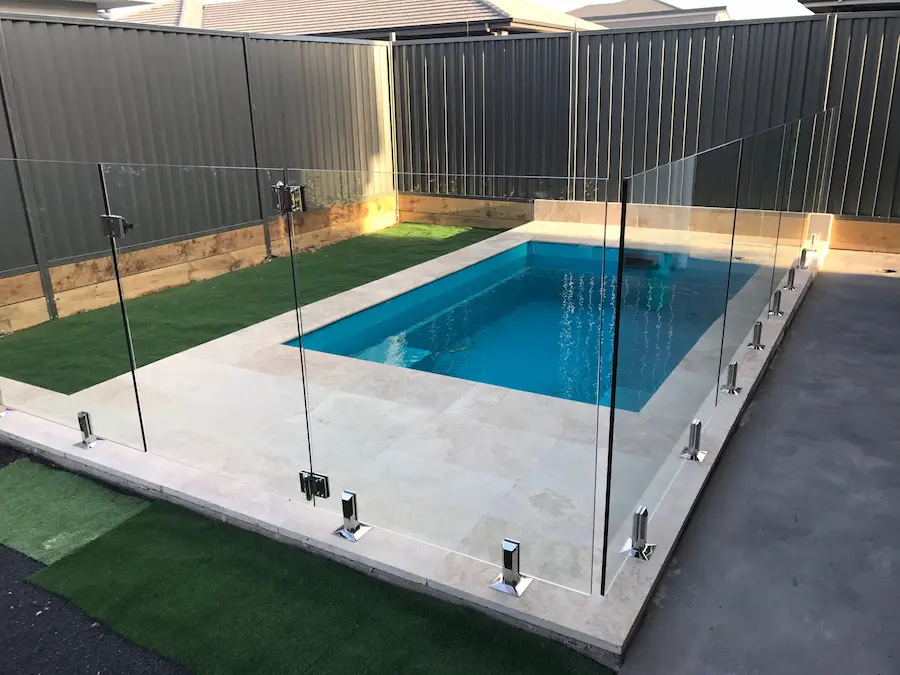
A fibreglass pool is a pre-manufactured swimming pool shell made from reinforced composite materials, including layers of glass fibres and resin. It is built in a controlled factory environment, then delivered to your property and installed in one piece.
For homeowners planning a large inground pool, this construction method offers a more efficient and predictable installation process. Once the site is prepared, the shell is placed into position, reducing build time compared to pools constructed entirely on-site.
The interior surface is finished with a gelcoat layer, which gives the pool its smooth texture, colour, and resistance to algae. Because the surface is non-porous, it requires less cleaning and fewer chemicals to maintain water quality over time.
Fibreglass pools are also designed to flex slightly with minor ground movement, making them particularly well suited to many Sunshine Coast properties. From sandy coastal soils around Maroochydore and Caloundra to sloping hinterland blocks, the shell can accommodate small ground movements that may place additional stress on more rigid pool structures.
While design options are limited to pre-made moulds, modern fibreglass pools are available in a variety of full-size layouts (typically 6m to 10m+) suitable for swimming, relaxing, and everyday family use.
Key Advantages of Fibreglass Pools
Fibreglass pools have become a popular choice for homeowners because they offer a strong balance between installation speed, low maintenance, and long-term durability. For those planning a large inground pool, these advantages become even more noticeable over time.
1. Faster Installation
One of the biggest advantages of fibreglass pools is how quickly they can be installed.
Because the pool is delivered as a pre-formed shell, most of the work focuses on site preparation and placement rather than building the structure from scratch. This allows a large fibreglass pool to be completed in a matter of weeks, rather than months.
For homeowners, this means less disruption, fewer delays, and a faster path from construction to actually using the pool.
2. Low Maintenance and Easy Cleaning
Fibreglass pools are designed for easy upkeep.
The smooth, non-porous gelcoat surface helps prevent algae buildup, which reduces the need for heavy scrubbing and excessive chemical use. Water stays balanced more easily, and routine cleaning takes less time compared to other pool types.
Fibreglass pools are also highly compatible with saltwater chlorination systems, which remain one of the most popular sanitation options across Queensland. The non-porous gelcoat surface resists salt-related surface deterioration and does not suffer from etching like some other pool finishes.
For larger pools, this is a major benefit. Less maintenance means more time enjoying the pool.
3. Strong Durability and Long Lifespan
Most fibreglass pools can perform reliably for 25 to 30+ years with proper care. The flexible structure allows the pool to adapt to minor ground movement, reducing the risk of cracks compared to more rigid construction methods.
This flexibility is particularly valuable throughout the Sunshine Coast, where sandy soils, elevated groundwater and seasonal rainfall can contribute to natural ground movement over time.
This makes fibreglass a dependable option for long-term use, especially in areas with shifting soil or coastal conditions.
4. Lower Lifetime Costs
Many homeowners recover much of this difference over time through reduced maintenance, lower chemical consumption, and avoiding future resurfacing or liner replacement costs.
There is no need for liner replacement, resurfacing, or frequent structural repairs. Combined with lower maintenance requirements, this helps reduce total ownership costs over the life of the pool.
For homeowners planning a large backyard pool, these long-term savings can be significant.
5. Comfortable Surface and Modern Finish
Fibreglass pools are designed with comfort in mind.
The smooth surface is gentle on feet and skin, making it safer for children, pets, and regular use. Built-in steps, ledges, and seating areas are also part of the moulded design, creating a more user-friendly swimming experience.
Modern finishes and colour options allow the pool to blend well with outdoor spaces, giving a clean and polished look without additional surface treatments.
What This Means for You
Fibreglass pools aren’t simply quicker to install – they’re designed to reduce the time, cost, and maintenance involved throughout ownership. For many Sunshine Coast homeowners, the combination of fast installation, low maintenance, saltwater compatibility and long-term durability makes fibreglass one of the most practical choices for a family swimming pool.
When you compare upfront cost, long-term maintenance, and installation speed across inground pool options, reviewing vinyl vs fibreglass also provides you a clearer understanding of how liner-based systems differ from composite fibreglass pools in real backyard use.
Potential Downsides of Fibreglass Pools
While fibreglass pools offer many advantages, they are not the right fit for every situation. Understanding the limitations upfront helps you make a more informed decision and avoid unexpected issues later on.
1. Limited Design Flexibility
Fibreglass pools are manufactured using pre-designed moulds, which means you are selecting from a range of existing shapes and sizes rather than creating a fully custom design.
For most homeowners, modern designs cover common needs such as full-size rectangular pools, lap pools, and family-friendly layouts. However, if you are planning a highly customised pool with unique curves, depths, or integrated features, other construction methods may offer more flexibility.
2. Size and Transport Constraints
Because fibreglass pools are delivered in one piece, their size is limited by transportation and site access.
While there are many large fibreglass pool options (typically up to 10m or more), extremely wide or oversized designs may not be feasible depending on delivery conditions and access to your property.
This is rarely an issue for standard backyard installations, but it should be considered for larger or more complex projects.
3. Higher Upfront Cost
Fibreglass pools can have a higher initial cost compared to some alternatives, particularly vinyl liner pools.
However, this difference is mostly at the start. Over time, lower maintenance requirements and the absence of liner replacement help balance out the total cost of ownership.
For homeowners focused on long-term value, the upfront investment is often offset over the life of the pool.
4. Repair and Surface Limitations
Although fibreglass pools are durable, surface damage can occur over time due to wear, chemical imbalance, or external impact.
Repairs are usually manageable, but matching the original gelcoat finish perfectly can be difficult in some cases. This is typically a cosmetic issue rather than a structural concern, but it’s worth noting for homeowners who prioritise visual consistency.
5. Installation Requires Experience
Fibreglass pool installation must be handled correctly to avoid long-term issues.
Because the pool is a one-piece shell, proper placement, levelling, and backfilling are critical. Poor installation can lead to movement, structural stress, or drainage problems.
This is why working with an experienced fibreglass installer especially one familiar with local soil and site conditions is essential for a successful outcome.
What This Means for You
Most of the limitations of fibreglass pools are not deal-breakers; they are simply factors to plan for.
For standard backyard projects, especially those involving large, practical pools, these downsides are usually outweighed by the benefits of faster installation, lower maintenance, and long-term durability.
Is a Fibreglass Pool Right for You?
Choosing the right pool comes down to how you balance budget, design preferences, installation timeline, and long-term maintenance. Fibreglass isn’t the perfect solution for everyone, but for many homeowners, it offers the most practical balance across these factors.
Budget and Long-Term Value
If you’re focused on the lowest upfront cost, fibreglass may not always be the cheapest option. However, when you look beyond installation, it often provides better value over time.
With no liner replacements and fewer maintenance requirements, fibreglass pools can reduce ongoing costs significantly. For homeowners planning a large inground pool, these long-term savings become more noticeable.
Design Expectations
Fibreglass pools work best when you’re comfortable choosing from a range of pre-designed shapes and sizes.
Most modern designs are built to suit everyday use, including full-size family pools, lap pools, and compact layouts for smaller spaces. If your project requires a completely unique shape or highly customised features, you may need to consider alternative construction methods.
Installation Timeline
If speed matters, fibreglass has a clear advantage.
Because the pool is pre-manufactured, installation is faster and more predictable. This is ideal if you want to avoid months of construction or plan to have your pool ready for a specific season.
For many homeowners, especially those preparing for summer, this shorter timeline is a major factor in their decision.
Maintenance and Lifestyle
Think about how much time you want to spend maintaining your pool.
Fibreglass pools are designed for easier upkeep, with a smooth surface that helps reduce algae growth and chemical use. This makes them a strong option for homeowners who want to spend more time using their pool rather than maintaining it.
For larger pools, this becomes even more important, as maintenance effort increases with size.
Site Conditions and Installation Requirements
Your backyard plays a key role in determining whether fibreglass is suitable. Because the pool is delivered in one piece, access to your property needs to be considered. In some cases, crane installation may be required for larger pools or tight-access sites.
Across the Sunshine Coast, many properties feature sandy soils, sloping sites, elevated groundwater or limited side access. An experienced installer will assess these conditions before construction to determine whether excavation, drainage improvements or crane installation are required.
For properties with sloped blocks, limited excavation access, or high water tables, considering above ground pools offers a practical alternative that reduces excavation costs while maintaining durability and faster installation timelines.
Final Consideration
If you’re looking for a large, low-maintenance pool that can be installed quickly and performs well over time, fibreglass is often the right choice.
If your priority is full customisation or a highly unique design, other options may be worth exploring. But for most standard backyard projects, fibreglass offers a reliable and practical solution.
Conclusion
Fibreglass pools offer a strong balance of fast installation, low maintenance, and long-term durability. While they come with some limitations such as less design flexibility and a higher upfront cost, they provide reliable performance and lower ongoing expenses over time.
For homeowners planning a large inground pool, these advantages become even more important. A fibreglass pool allows you to enjoy your backyard sooner, spend less time on maintenance, and avoid major replacement costs in the future.
At Plunge Pools Sunshine Coast, we focus on delivering full-size fibreglass pool installations that suit real backyard conditions from coastal soil to sloped blocks and tight-access sites. Our team handles everything from site assessment and approvals through to installation and final handover.
If you’re ready to build a durable, low-maintenance pool designed for everyday use, the next step is simple. Get a site assessment and detailed quote from our team and start planning a fibreglass pool that fits your space and lifestyle.
People Also Ask
How long does a fibreglass pool really last?
With proper installation, balanced water chemistry, and routine maintenance, a quality fibreglass pool shell typically lasts 30 to 50 years or more. The durable composite construction is designed to withstand decades of everyday use without requiring resurfacing.
Can fibreglass pools crack in freezing temperatures?
Fibreglass pools are naturally flexible and can tolerate minor expansion and contraction better than rigid concrete structures. While freezing conditions are uncommon across Queensland, this flexibility helps minimise the risk of structural cracking in colder climates.
Are fibreglass pools pet-friendly?
Yes. Fibreglass pools are very pet-friendly. The durable gelcoat finish resists scratches from dog claws, while the smooth surface is comfortable for pets entering and exiting the water. Pet hair also does not damage the pool surface when proper filtration and routine maintenance are maintained.
What’s the best way to clean a fibreglass pool?
Routine cleaning involves brushing the pool walls, vacuuming debris, maintaining balanced water chemistry, and regularly cleaning the filtration system. The smooth gelcoat surface helps reduce algae growth, making fibreglass pools easier to maintain than many alternative pool finishes. Learn more here how to clean your fibreglass pool properly.
How much does it cost to repair a fibreglass pool?
Minor cosmetic repairs generally range from $300 to $800, while larger gelcoat repairs or structural restoration may exceed $2,000, depending on the extent of the damage. Proper installation and ongoing maintenance significantly reduce the likelihood of major repairs.