At Plunge Pools Sunshine Coast, we help local homeowners make sense of these costs every day. Our work focuses on plunge pool supply, planning, and installation support across the Sunshine Coast and wider Queensland. We work closely with certifiers, engineers, and your chosen pool builder to ensure pricing reflects real-world conditions. We deal with real sites, real councils, and real budgets.
In this article, you will learn how Plungie pool pricing works in Queensland, what drives the biggest cost changes, and which homes benefit most from this type of pool. We will cover shell prices, full installed costs, council rules, long-term ownership costs, and common mistakes to avoid.
How Much Does a Plungie Pool Cost in Queensland?
A Plungie pool in Queensland typically costs between $35,000 and $65,000 fully installed, while shell-only prices usually sit in the high teens to mid twenties, depending on the model and delivery location.
| Option | Typical Price (QLD) | What’s Included |
|---|---|---|
| Shell-only | High teens – mid twenties |
|
| Fully installed | $35k – $65k |
|
Why prices change: site access, ground type, crane distance, distance from factory, local rules, and finish choices.
What Is a Plungie Pool?
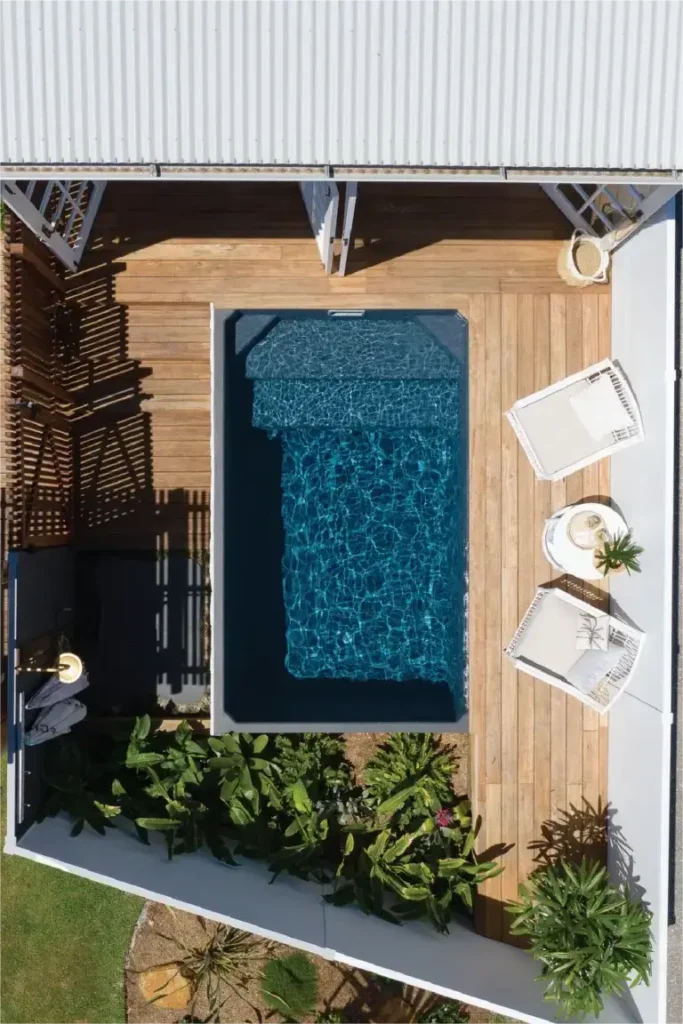
A Plungie pool is a precast concrete plunge pool that’s manufactured off-site in a controlled factory environment and delivered to your home as a single, reinforced concrete shell. Once on-site, it’s craned into position and connected, dramatically reducing build time, weather delays, and on-site disruption compared to traditional concrete pool builds.
Why Plungie Pools Work So Well in Queensland:
Plungie pools are particularly well-suited to QLD conditions, where climate, block size, and council requirements can complicate traditional pool builds.
- Built for QLD heat, storms, and heavy rain
Precast concrete is dense, strong, and stable. A Plungie pool handles extreme heat, summer downpours, and storm activity far better than lightweight alternatives. The factory-cured shell reduces cracking risks caused by soil movement and moisture changes common across Queensland. - Ideal for small, narrow, or sloping blocks
Many homes in Brisbane, the Sunshine Coast, and the Gold Coast have limited yard space or fall-away blocks. Because a Plungie pool has a compact footprint and can be installed in-ground, semi-in-ground, or above-ground, it’s a practical solution where space or access is tight. - Faster installation than custom concrete pools
A traditional concrete pool can take several months from excavation to be swim-ready. A Plungie pool installation in QLD is often completed in weeks, not months, once approvals are in place. Less time on-site means less disruption to your home and fewer weather-related delays.
Shell-Only vs Fully Installed
One of the biggest sources of confusion in plunge pool pricing is the difference between shell-only pricing and a fully installed, turnkey plunge pool. These are not comparable products. They sit at completely different stages of the build process, involve different risks, and require different levels of coordination, compliance, and cost.
Shell-Only (what you get)
- Factory-made concrete shell
- Structural steel inside
- Internal finish applied in the factory
Not included: delivery, excavation, crane, plumbing, electrical, fencing, and approvals.
Fully Installed (turnkey)
- Shell delivered and placed
- Excavation and base
- Plumbing, filtration, and electrical bonding
- Fencing and safety certification
- Handover is ready to swim
Common mistake: Comparing a shell price to a full install price. They’re not the same thing.
Cheapest vs Most Expensive Scenarios
When comparing plunge pool prices, many buyers assume cost differences come from the pool itself. In reality, the pool shell is often identical. What changes the final price are the site, the access, and the ground conditions around the pool.
| Low-Cost Setup | High-Cost Setup |
|---|---|
| Flat block, easy side or front access | Sloping or narrow site |
| Short crane lift or no crane required | Long crane lift over the house |
| Normal soil with simple drainage | Rock, reactive clay, or extra retaining needed |
| Metro location near installers | Regional or hard-to-reach areas |
The pool is the same. The site changes the price.
Why Site Assessment Matters Before Comparing Quotes
Two quotes for the same Plungie model can look wildly different if one builder has allowed for site realities and the other has not.
A proper site assessment helps:
- Avoid surprise costs mid-build
- Compare quotes on equal scope
- Choose the right installation approach
- Set realistic budget expectations
For homeowners, understanding these cheapest vs most expensive scenarios is the difference between a smooth installation and a stressful one.
How Plungie Pricing Works
Plungie pool pricing is determined by four core factors: factory cost, freight, site complexity, and installer markup.
Four parts make up the final price:
1. Factory Cost (The Fixed Base Price)
The factory cost is the starting point of all Plungie pricing.
This includes:
- Precast concrete materials
- Steel reinforcement
- Factory labour
- Waterproofing and internal finishes
- Structural curing and quality control
Because Plungie pools are manufactured in a controlled factory environment, this part of the price is consistent and predictable. Two homeowners buying the same Plungie model will pay a similar factory price, regardless of location.
However, factory cost varies by model.
Model Choice and Price Impact
- Plungie Studio / Arena: Smaller footprint, lighter shell, lower base cost
- Plungie Original: Mid-range size with balanced installation requirements
- Plungie Max: Larger shell, heavier weight, deeper excavation, higher base price
Larger models increase costs beyond the factory price because they affect freight, excavation depth, and crane size.
2. Freight Costs (Distance and Size Matter)
Freight is one of the most misunderstood parts of Plungie pricing.
Freight cost depends on:
- Distance from the manufacturing facility
- Pool shell size and weight
- Transport permits and escort requirements
- Regional vs metro delivery
A larger Plungie shell requires:
- Wider transport vehicles
- More handling equipment
- Higher fuel and logistics costs
This is why the same Plungie pool can cost more in regional Queensland than in metro areas like Brisbane or the Sunshine Coast.
3. Site Complexity (The Biggest Variable)
Site conditions are the largest driver of price variation in Plungie pool installations.
Key site factors include:
- Access width for excavation equipment
- Need for crane lifts (over house, powerlines, or fencing)
- Slope or retaining walls
- Soil type (sand, clay, rock, reactive soil)
- Drainage and groundwater management
Why Site Complexity Changes the Price So Much
A flat block with side access may only require:
- Standard excavation
- Small crane or no crane
- Minimal retaining
A sloping or tight-access site may require:
- Large crane hire
- Rock excavation
- Engineered retaining walls
- Extra drainage solutions
The pool is identical. The ground is not.
4. Installer Markup (What You’re Actually Paying For)
Installer markup is not just profit. It covers the real-world responsibility of delivering a compliant, functional pool.
This typically includes:
- Skilled labour
- Equipment and machinery
- Insurance and liability cover
- Council approvals and compliance
- Plumbing, electrical bonding, and commissioning
Installers price differently based on:
- Risk level of the site
- Time required on site
- Coordination with engineers, certifiers, and councils
Lower quotes often exclude items like fencing, electrical bonding, or certification. Higher quotes usually reflect full compliance and reduced risk.
How Much Does a Turnkey Plungie Pool Cost in QLD?
A turnkey Plungie pool in Queensland typically costs between $35,000 and $65,000 fully installed. This price reflects a cost-effective alternative to fully custom concrete pools when installation conditions are planned correctly.+
Some installs come in lower, some higher. The final price depends mainly on your block, site access, soil conditions, and compliance requirements rather than the pool shell itself.
What the $35,000–$65,000 Range Really Means
Most advertised “from” prices for Plungie pools in QLD are based on ideal site conditions, not average homes. These entry prices usually assume:
- Flat land with no slope
- Easy side or front access
- No rock or reactive clay
- Short or no crane lift
- Basic pool fencing only
- Metro location close to installers
In reality, many Queensland homes introduce extra variables that affect the final turnkey price.
Timeframe: Order to Swim
For most homeowners, a realistic timeframe from ordering a plunge pool to swimming is 8 to 14 weeks in Queensland. This range reflects real-world conditions rather than best-case marketing timelines. While factory-made concrete plunge pools are faster than custom concrete pools, they are still affected by approvals, weather, and site conditions.
Typical Plunge Pool Installation Timeline in QLD
1. Manufacturing
Once the pool model is confirmed, the precast concrete shell is manufactured in a controlled factory environment. This stage ensures consistent quality, structural strength, and internal finishes. Manufacturing time is generally predictable, but popular models or peak building seasons can extend lead times.
2. Council approvals and compliance checks
Local council approvals, pool barrier requirements, and safety compliance checks run alongside manufacturing. Approval timelines vary by council across Brisbane, the Sunshine Coast, the Gold Coast, and regional Queensland. Some councils process applications quickly, while others experience backlogs, especially during high construction periods.
3. Site preparation and excavation
This phase includes excavation, spoil removal, base preparation, and drainage. Soil conditions play a major role here. Sandy sites are usually quicker, while clay, rock, or reactive soils require extra engineering and time.
4. Delivery and installation
The pool shell is transported to the site and installed using a crane if required. The actual placement often happens in a single day, but preparation and coordination can take longer, especially on narrow or sloping blocks.
5. Plumbing, electrical, and compliance sign-off
Plumbing, filtration, electrical bonding, and safety barriers must meet Queensland pool safety standards. Final inspections and certification are required before the pool can legally be used.
Factors That Extend the Timeline in QLD
- Wet season rainfall is causing excavation delays
- Council approval bottlenecks
- Restricted site access requiring specialised cranes
- Unexpected rock or poor soil conditions
- High demand periods in spring and summer
Planning for the longer end of the 8 to 14 week window reduces stress and avoids rushed decisions that can increase costs.
Itemised Cost Breakdown
| Cost Part | What Changes the Price | Why It Matters |
|---|---|---|
| Site prep & excavation | Flat vs slope, sand vs clay vs rock | Sets your base and long-term stability |
| Crane & access | Lift length, street access, overhead lines | Bigger or longer lifts cost more |
| Plumbing & electrical | Pump, filter, sanitation, bonding | Must meet QLD safety rules |
| Fencing & certification | Fence length, aluminium vs glass, gates | Certification is required to legally use the pool |
| Freight & delivery | Distance, shell size and weight | Regional jobs usually cost more |
| Landscaping & surrounds | Decking, coping, drainage, tiling | Shapes how the pool looks, feels, and functions |
What Approvals and Safety Rules Apply to Pools in QLD?
In Queensland, pools require building approval, must comply with strict pool safety and fencing laws, and usually must be registered on the QLD Pool Safety Register. A pool safety certificate is required when selling or renting.
1. Building Approval for Pools in QLD
In Queensland, most pools require building approval before work starts. This applies to:
- In-ground plunge pools
- Semi in-ground pools
- Above-ground pools over 300mm deep
- Precast concrete pools, including Plungie pools
Who Issues Building Approval?
You have two legal pathways:
Council Approval
- Approval is issued directly by your local council
- Often slower, but may be required in special zones
- Common in flood-prone, heritage, or environmentally sensitive areas
Private Building Certifier
- Independent certifier licensed in QLD
- Faster and more common for residential pool projects
- Must still comply with council planning rules
Important: A private certifier does not bypass council rules. They ensure your pool meets the Queensland Building Act and local planning requirements.
2. Planning Rules That Can Affect Pool Approval
Before approval is granted, your block is assessed for:
- Setbacks from boundaries and buildings
- Easements, sewer lines, and stormwater infrastructure
- Flood overlays and coastal hazard zones
- Slope, retaining walls, and excavation depth
These factors are especially relevant for small blocks, sloping sites, and urban areas like Brisbane, the Sunshine Coast, and the Gold Coast.
3. Pool Safety Laws in Queensland
Queensland has some of the strictest pool safety laws in Australia.
Pool Safety Certificate Requirements
You need a Pool Safety Certificate if you are:
- Selling a property with a pool
- Leasing or renting a property with a pool
- Operating short-term accommodation (including Airbnb)
Certificates are issued by licensed pool safety inspectors and confirm compliance with Queensland pool fencing laws.
4. Pool Fencing Rules in QLD
All pools must meet the Queensland Development Code MP 3.4, including:
- Minimum fence height of 1200mm
- Self-closing, self-latching gates
- No climbable objects within restricted zones
- Compliant boundary fencing, if used as part of the pool barrier
The rules apply regardless of pool type, age, or size. Older pools are not exempt.
5. Pool Registration on the QLD Pool Safety Register
Most residential pools must be registered on the Queensland Pool Safety Register.
Registration is required:
- After construction
- Before selling or leasing
- When applying for a safety certificate
Failure to register can prevent settlement during a sale and delay tenancy agreements.
6. Electrical and Plumbing Compliance
Pool installations must also meet:
- Queensland electrical safety laws
- Bonding and earthing requirements
- Plumbing and drainage standards
Certificates from licensed trades are usually required before final approval and handover.
7. Common Approval Mistakes That Cost Homeowners
Some of the most expensive mistakes include:
- Starting excavation before approval
- Assuming small plunge pools do not need permits
- Comparing shell-only prices without approval costs
- Installing fencing late or incorrectly
- Forgetting pool registration
These errors can result in stop-work notices, rework costs, and insurance refusal.
8. Why Approvals Should Be Planned Early
Approvals affect:
- Project timeline
- Total installation cost
- Crane access and placement strategy
- Compliance sign-off and final handover
In Queensland, delays and approval bottlenecks during the wet season can add weeks if approvals are not secured early.
Regional Price Patterns in QLD
Pricing for plunge pools in Queensland is not uniform. While the pool shell itself has a relatively fixed factory price, where your property is located in QLD plays a major role in the final installed cost. Freight distance, installer availability, site access, crane logistics, and local construction conditions all change from region to region. Below is a detailed breakdown of how prices typically trend across Queensland and why.
| Area | Price Pattern | Main Reasons |
|---|---|---|
| Brisbane | Near average | Good installer availability, steady freight |
| Sunshine Coast | Wider range | Slopes, tight access, crane needs |
| Gold Coast | Mid to upper | Tighter sites, premium finishes |
| Regional QLD | Upper range | Longer freight, travel and labour, fewer cranes |
What Are the Ongoing Ownership Costs of a Plunge Pool?
Ongoing plunge pool ownership costs include regular maintenance, electricity, pool chemicals, and occasional equipment replacement.
Below is a clear breakdown of what most plunge pool owners can expect.
1. Regular Maintenance Costs
Typical cost: $0 – $150 per month (DIY vs professional)
Maintenance includes:
- Skimming debris
- Brushing walls and steps
- Cleaning the filter
- Checking water balance
DIY Plunge Pool Maintenance
If you maintain the pool yourself:
- Costs stay low
- Requires basic water testing and cleaning
- Ideal for owners who enjoy light upkeep
DIY maintenance suits many plunge pool owners because the smaller water volume is easier to manage than a full-size swimming pool.
Professional Pool Servicing
Professional servicing usually costs:
- $80 – $150 per visit
- Weekly, fortnightly, or monthly options
This is popular for:
- Busy homeowners
- Holiday homes
- Rental properties
2. Electricity Costs
Typical cost: $20 – $50 per month
Electricity is mainly used by:
- Pool pump
- Filtration system
- Optional heating (if installed)
Because plunge pools hold less water:
- Pump cycles are shorter
- Less filtration time is required
- Energy consumption is lower than that of large pools
Using:
- Variable-speed pumps
- Timers
- Energy-efficient filters can significantly reduce electricity costs over time.
3. Pool Chemicals and Water Treatment
Typical cost: $20 – $40 per month
Chemical costs include:
- Chlorine or sanitiser
- pH balancers
- Algaecide (as needed)
Smaller plunge pools are used:
- Less chlorine
- Fewer balancing chemicals
- Smaller treatment doses
This makes plunge pool chemical costs lower than standard concrete or fibreglass pools.
Saltwater plunge pools may have slightly higher upfront setup costs but lower ongoing chemical spending.
4. Equipment Replacement and Repairs
Occasional costs over time
Like any pool, some components will need replacement:
- Pool pump: every 7–10 years
- Filter media: every 3–5 years
- Chlorinator cells: every 5–7 years
- Lights or control systems: as required
Because plunge pool systems are smaller:
- Replacement parts are often cheaper
- Labour time is reduced
- Wear and tear is generally lower
Planning a small annual allowance for repairs helps avoid unexpected costs.
5. Heating Costs (Optional)
Heating options include electric heat pumps and solar heating, which can extend the swimming season while keeping energy use lower in Queensland’s climate.
Heating options include:
- Electric heat pumps
- Solar pool heating
Heating costs vary based on:
- Usage frequency
- Desired water temperature
- Local climate
A plunge pool heats faster than a large pool due to its size, which can reduce heating run time and energy use.
DIY vs Professional Servicing: Which Is Better?
Both options work well if done correctly.
DIY is ideal if you:
- Want lower ongoing costs
- Don’t mind basic weekly checks
- Prefer full control over maintenance
Professional servicing suits you if you:
- Want convenience
- Travel often
- Own a rental or holiday property
- Prefer consistent water quality without effort
Many owners choose a hybrid approach: DIY most of the year with occasional professional check-ups.
Plungie vs Other Pool Types
| Type | Speed | Feel & Strength | Design Flex | Notes |
|---|---|---|---|---|
| Plungie (precast concrete) | Fast install | Solid, durable | Fixed sizes | Predictable cost and time |
| Fibreglass plunge | Fast | Light feel | Limited shapes | Often lower upfront |
| Poly plunge | Fast | Can flex in reactive soils | Limited | Usually the lowest upfront |
| Custom concrete | Slowest | Very solid | Any shape | Highest control and budget |
Choose based on site, budget, and how you’ll use it.
What are Common Cost Blowouts? (Avoid These)
Common plunge pool cost blowouts come from poor site assessment, incorrect access assumptions, oversizing the pool, upgrading too early, and missing compliance requirements.
These mistakes can add thousands of dollars and weeks of delay to a plunge pool installation in QLD, especially on small or sloping blocks.
Below is a clear breakdown of the most common causes of budget overruns, why they happen, and how to avoid them.
- Guessing access (measure paths, street width, overhead lines)
- Skipping site checks (rock, drainage, unstable soil)
- Oversizing the pool (deeper dig, bigger crane, less yard)
- Adding every upgrade on day one (stage some later)
- Ignoring compliance (failed inspections add cost and time)
How to Cut Your Costs? (Smart Wins)
You can reduce plunge pool installation costs in QLD by timing the build well, planning early during a new home build, staging upgrades, preparing access properly, and choosing an experienced installer.
These smart decisions lower labour, machinery, and rework costs without compromising pool quality or compliance.
Below are the most effective, real-world ways to keep your plunge pool budget under control.
- Pick the right time: avoid peak demand and heavy rain periods
- Plan during a new build: share excavation and services
- Stage upgrades: add heating/automation later
- Prepare access: clear paths, plan drainage early
- Choose the right installer: experience saves rework
Is a Plungie Pool Worth It in QLD?
Yes, for many Queensland homes, a Plungie pool is worth it. You get a factory-built concrete plunge pool with faster installation, predictable pricing, and strong performance on small, sloping, or access-restricted blocks. If you want a large, fully custom shape, a traditional custom concrete pool may be a better fit.
Decision Checklist for QLD Buyers
Before deciding if a Plungie pool is worth it for your home, ask yourself:
Is My Site Suitable?
Plungie pools work best on blocks with limited space, slopes, or access challenges. Crane access and soil conditions still matter, but many “difficult” sites suit this type of pool.
Can I Meet QLD Pool Rules?
Queensland has strict pool fencing, setback, and safety certification requirements. Plungie pools are commonly installed with compliant fencing and certification pathways, but approvals still need to be planned early.
Does This Fit My Lifestyle?
Plunge pools are designed for cooling off, relaxing, entertaining, and light exercise. If your priority is laps or a resort-scale pool, a plunge pool may feel limiting. If you want low maintenance, efficient use of space, and everyday enjoyment, it often fits perfectly.
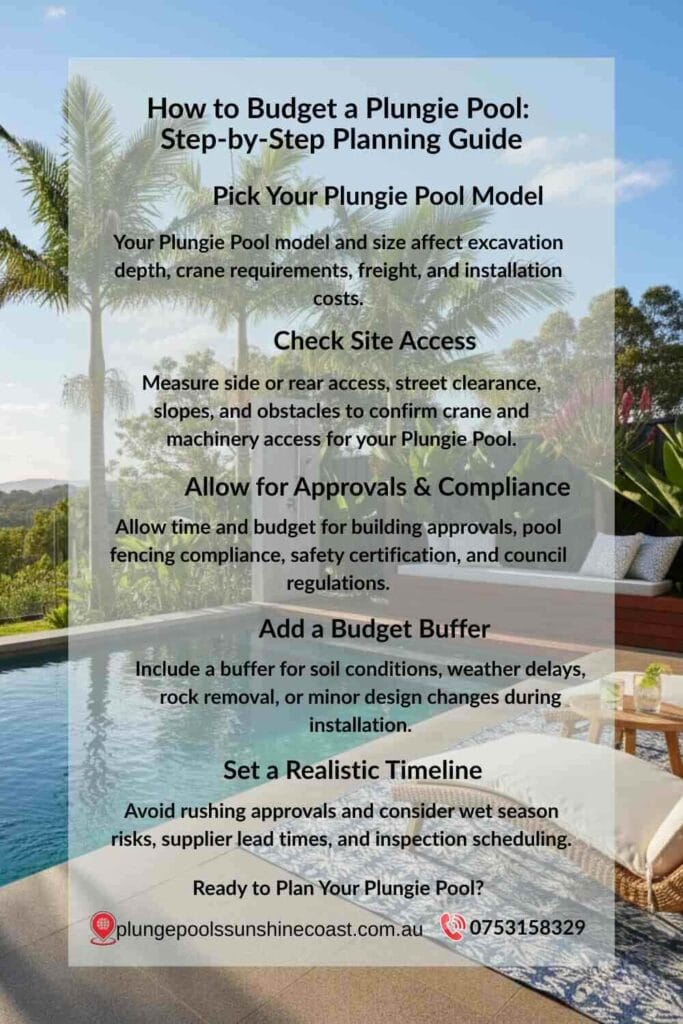
This process helps you decide whether to install a plunge pool with confidence and minimal surprises.
Conclusion
Installing a Plungie pool on the Sunshine Coast can be a smart investment in both your home and your lifestyle. When you understand how pricing works, what affects installation costs, and how Queensland rules apply, it becomes much easier to plan with confidence. A Plungie pool offers strong structure, faster installation, and long-term value, while still allowing a level of customisation through finishes, fencing, and surrounds.
The key is careful planning and choosing the right local partner. Working with an experienced provider like Plunge Pools Sunshine Coast helps ensure your pool is installed correctly, complies with QLD regulations, and suits your site and budget. This reduces risk, avoids delays, and protects your investment.
With the right guidance, owning a Plungie pool does not need to be stressful or expensive. If you are ready to turn your backyard into a practical and relaxing retreat, contact Plunge Pools Sunshine Coast, your local Plunge pool service provider. We offer site assessments, clear pricing guidance, and support from planning through installation to help you get it right from the start.
FAQs
1. How much will a Plungie pool actually cost for my Sunshine Coast property?
A Plungie pool on the Sunshine Coast usually costs between $35,000 and $65,000 fully installed. The final price depends on access, slope, soil, crane needs, and council requirements specific to your block.
2. Is my backyard suitable for a Plungie pool, especially if my block is small or sloping?
Yes, most small or sloping Sunshine Coast blocks can suit a Plungie pool.
Because the pool is precast, it can be installed in-ground, semi-in-ground, or above-ground to match difficult sites.
3. What hidden costs should I budget for when installing a Plungie pool in QLD?
Common hidden costs include crane hire, rock excavation, drainage, fencing upgrades, and certification fees. These costs appear when access or soil conditions are not assessed early, which is why site checks matter.
4. Do I need council approval or certification for a Plungie pool on the Sunshine Coast?
Yes, Plungie pools in Queensland usually need building approval, pool registration, and safety certification. Missing approvals can delay use, affect insurance, and create problems when selling or renting the property.
5. Why should I choose a Plungie pool instead of a fibreglass or a poly plunge pool?
A Plungie pool offers stronger concrete construction and a longer lifespan than fibreglass or poly pools. While the upfront cost may be higher, the structure, stability, and durability often provide better long-term value.